Mental health recovery can involve difficult emotions, personal growth, and learning new ways to manage everyday challenges. For some people, symbols provide a simple reminder of hope, strength, and continued progress.
Mental health recovery symbols also help people express their experiences when discussing them feels difficult. They can encourage conversations, raise mental health awareness, and remind others that support is available.
Different symbols carry different meanings depending on personal experiences and cultural backgrounds. Understanding these meanings can help you choose a symbol that reflects your own journey.
What Do Mental Health Recovery Symbols Mean?
Mental health recovery symbols represent ideas such as hope, resilience, healing, acceptance, and connection. Some are widely used in awareness campaigns, while others hold personal meaning for individuals.
These symbols cannot explain someone's mental health condition or measure their recovery. Instead, they offer a visual way to communicate feelings, experiences, and messages of encouragement.
Mental Health Recovery Symbols and Their Meanings
1. Semicolon (;) for Hope and Continuity
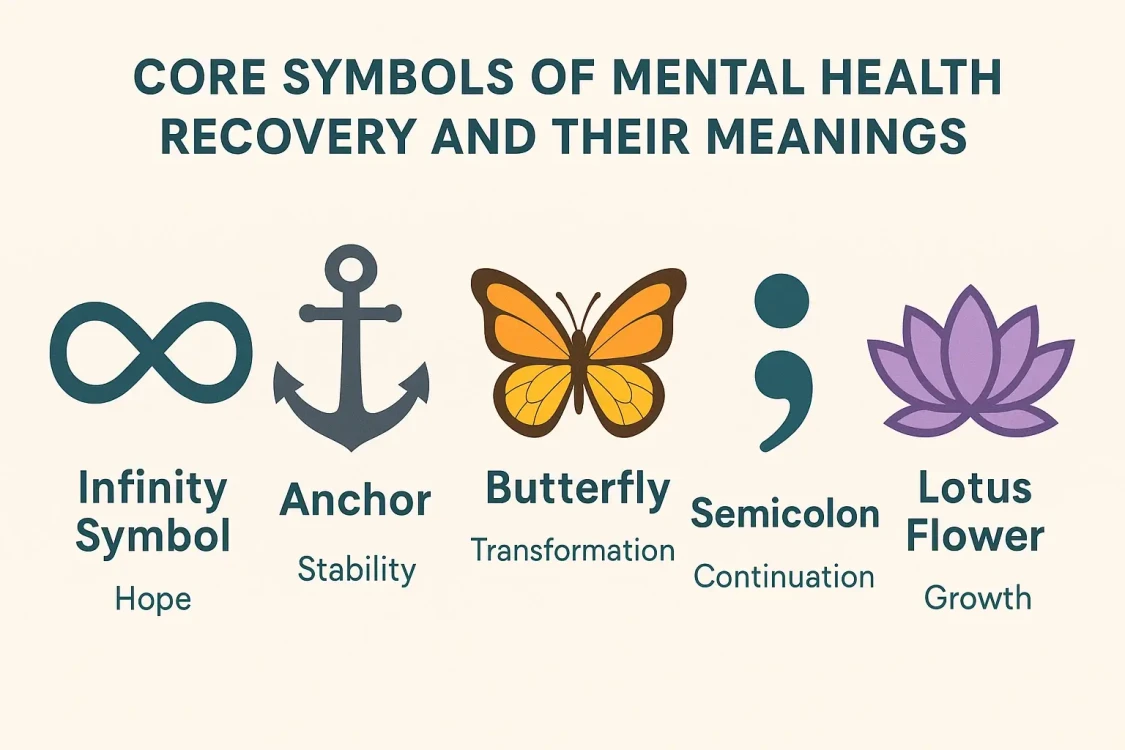
The semicolon is one of the most recognized symbols associated with mental health struggles and suicide prevention. It represents a moment when a sentence could end but continues instead.
Project Semicolon uses this symbol to encourage people facing depression, self injury, addiction, and other challenges. For many individuals, a semicolon tattoo serves as a personal reminder to keep going.
Its meaning is simple but powerful: a difficult chapter does not have to end your story.
2. Green Ribbon for Mental Health Awareness
The green ribbon is an internationally recognized symbol of mental health awareness. People wear it to show support, encourage understanding, and challenge the stigma surrounding mental health conditions.
Green ribbons can also communicate solidarity with people experiencing emotional difficulties. Wearing one or sharing its message can help start conversations about mental health.
However, the ribbon represents awareness and support rather than one specific mental health condition.
3. Butterfly for Transformation and Growth
The butterfly often represents change, personal growth, and the possibility of new beginnings. Its transformation from a caterpillar into a butterfly makes it meaningful to people experiencing personal challenges.
For some, this symbol reflects the gradual process of understanding emotions and developing healthier coping strategies. It can also represent the courage required to rebuild confidence after difficult experiences. The butterfly does not suggest that recovery happens quickly. Instead, it reminds people that change can happen gradually over time.
4. Lotus Flower for Resilience and Renewal
The lotus flower grows in muddy water before opening into a flower. Because of this growth, many people associate it with resilience, renewal, and finding strength during difficult circumstances.
In some spiritual and cultural traditions, the lotus also carries meanings connected with peace and personal development. People may choose it to represent their efforts to move forward after emotional hardship. Its meaning depends on individual beliefs and cultural background.
5. Infinity Symbol (∞) for Ongoing Recovery
The infinity symbol represents something without a clear ending. In mental health recovery, some people use it to express continued growth, connection, and acceptance.
Recovery does not always follow a straight path, and progress can look different for everyone. The infinity symbol can remind people to remain patient with themselves during setbacks and periods of change. It may also represent the ongoing commitment to self care and emotional well being.
6. Phoenix for Rebirth and New Beginnings
The phoenix is a mythical bird associated with rising again after destruction. For some people, it represents rebuilding their lives after painful experiences or periods of emotional difficulty.
This symbol can express strength, hope, and the possibility of beginning again. It may feel meaningful to people who have overcome major personal challenges.
However, recovery does not require someone to become stronger through suffering. Everyone deserves support, understanding, and care throughout the process.
7. Anchor for Stability and Support
An anchor represents stability, security, and staying grounded during difficult conditions. In mental health recovery, it can symbolize supportive relationships, healthy routines, or personal values.
Some people use an anchor as a reminder to seek help when emotions become overwhelming. It can also represent the importance of having reliable people and resources during challenging periods. For many individuals, stability comes from small daily actions and consistent support.
Symbols Associated With Anxiety, Depression, and Trauma
People sometimes choose symbols to express experiences related to anxiety, depression, or trauma. A semicolon may represent hope, while an anchor can symbolize stability during emotional difficulties.
A butterfly or lotus flower may reflect personal growth following painful experiences. However, these meanings are not fixed, and no single symbol universally represents a specific condition.
If you choose a symbol, focus on what it means to you rather than assuming everyone will understand it the same way. Symbols can support self expression, but they cannot replace professional assessment, treatment, or practical support.
How to Choose a Personal Mental Health Recovery Symbol
Choosing a recovery symbol is a personal decision. Consider the message you want it to represent and how it connects with your experiences.
You might choose a symbol that reminds you to keep going, appreciate progress, or seek support when needed. Some people wear jewelry, choose tattoos, keep small drawings, or use symbols in personal journals.
Before choosing a design, consider these questions:
- Personal meaning: Does the symbol reflect your experiences, values, or hopes?
- Cultural meaning: Does it have religious or cultural associations you want to understand?
- Practical use: Would you prefer a tattoo, a piece of jewelry, or a simple image?
- Emotional connection: Does seeing the symbol provide encouragement or comfort?
Your choice does not need to be recognized by everyone. What matters most is whether it holds genuine meaning for you.
Final Thoughts
Mental health recovery symbols can provide meaningful ways to express hope, resilience, and personal experiences. They may also encourage conversations that reduce stigma and help people feel less alone.
Whether you choose a semicolon, green ribbon, butterfly, or another design, its meaning remains personal. Remember that recovery can take time, and seeking support is an important part of caring for your mental health.
References
- Project Semicolon: Our History
- Mental Health Foundation: Green Ribbon
- National Alliance on Mental Illness: Mental Health Awareness Month
- National Alliance on Mental Illness: Recovery Resources
- U.S. Department of Health and Human Services: Mental Health Awareness Toolkit


 Sophie Calder