
There is something deeply disturbing about a society that applauds people for suffering, provided they do it quietly. We celebrate the father who never complains, the employee who never misses a day, and the person who carries everyone's problems without asking for anything in return. We call these people strong, and we admire their resilience. But I wonder how often the qualities we admire are simply signs of suffering that we've learned to accept.
When Anticipating Everything Becomes a Prison
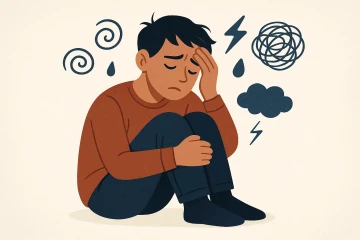
My heart would pound in anticipation of what the world would throw at me next. Before anything happened, I already had ten possible responses prepared for circumstances that existed only in my imagination. Of course, life never played out the way I anticipated, and there was never a moment of rest. Once one imagined catastrophe passed, I began preparing for another. It was a pattern that crippled my being, my relationships, my senses, my sleep, and eventually my conception of reality.
I convinced myself that anticipating every possible outcome was a form of preparedness. I believed remaining one step ahead of life would protect me from whatever came next. What I failed to recognize was that my preparation had become its own form of imprisonment. The Stoic philosopher Epictetus distinguished between what lies within our control and what does not. In retrospect, I can appreciate the absurdity of my behavior. I was attempting to control conversations that had never taken place, circumstances that had not happened, and catastrophes that existed nowhere outside my imagination. I was rehearsing how to survive a life I was barely allowing myself to experience.
I'm currently reading Robert Greene's The Laws of Human Nature, and one idea I've found particularly interesting is how poorly we sometimes understand our own motivations. We find explanations for our behavior that make us comfortable with ourselves, even when those explanations aren't entirely accurate. It has made me reconsider what I once regarded as strength. I thought my constant anticipation of disaster made me responsible and prepared, but I never seriously considered that the very behavior I believed was protecting me was also contributing to my suffering.
When Anxiety Becomes Impossible to Ignore
1. The Physical Symptoms of a Panic Attack
One day, while working, my palms became sweaty and my mouth began to dry. The pounding in my chest grew increasingly forceful, and numbness spread through my body like a flood. I thought I was having a heart attack, but I was experiencing what I later understood to be a panic attack. The following morning, I woke up with soreness throughout my entire body. I felt as though a train had struck me in my sleep, except the consequences of that imagined collision were painfully real. I went to urgent care, concerned that something might be wrong with my kidneys. I was told my symptoms were related to anxiety and was essentially advised to calm down.
Throughout this process, I often felt that I was being told, figuratively and metaphorically, to take a hike. Beyond a few friends who worked in healthcare, I felt that the healthcare system had failed me, although that is a story for another time. Eventually, I began ignoring my symptoms. If the people I turned to were not particularly concerned, perhaps I should not be either. That decision would become consequential, and what frightens me now is not simply that I experienced these symptoms, but how readily I learned to live with them.
2. Depression and the Struggle to Keep Functioning
I took the following day off, but shortly afterward, I returned to work. I continued with my responsibilities, interacted with others, and carried myself as though nothing had happened. Nobody looking at me would have known that I had recently experienced a panic attack so physically overwhelming that I believed I was having a heart attack. I had become remarkably skilled at appearing fine, even when my mind was anything but.
Eventually, I could no longer conceal what was happening. The anxiety was relentless, and depression had begun consuming parts of my life that I could no longer pretend were unaffected. Those closest to me became frightened that I might take my own life, and what makes that admission especially difficult is that there were moments when I felt that possibility myself. I had spent so much time preparing for imaginary catastrophes that I was failing to confront the very real danger unfolding within me. I think about how I could return to work, fulfill my obligations, and appear perfectly capable while experiencing that degree of psychological suffering. My ability to function had become convincing evidence to the outside world that I was okay, although it was never evidence that I actually was.
3. The Mental Health Treatment Gap
According to the Substance Abuse and Mental Health Services Administration's 2024 National Survey on Drug Use and Health, approximately 61.5 million American adults experienced mental illness that year, yet only 52.1 percent received mental health treatment. These figures cannot tell us how many people are suffering without a diagnosis, but they reveal a considerable treatment gap. I wonder how many of those individuals continue raising children, meeting deadlines, and maintaining relationships while privately struggling to make it through another day.
4. The Pressure to Keep Pushing Through
We have become remarkably comfortable admiring endurance. We congratulate people for working through exhaustion, praise parents who sacrifice every personal need, and admire individuals who never ask for help. There is nothing inherently wrong with dedication or sacrifice, but I question the message we send when someone is praised for consistently neglecting themselves.
The Hidden Expectations Behind Being Strong
1. The Author's Journey into Mental Health Coaching
Today, I work as a nonclinical mental health coach, and there is a certain irony in that. I now help people examine emotional patterns, unhealthy coping behaviors, and difficulties they encounter in their relationships with themselves and others, yet there was a time when I could barely understand what was happening within my own mind. My experiences do not make me an authority on someone else's suffering, nor do they replace the importance of qualified healthcare professionals. They have, however, given me an appreciation for how complicated it can be to acknowledge that something is wrong.
2. Understanding Our Hidden Motivations
In my work, I am interested in what people believe about themselves and how those beliefs influence their behavior. Someone may consider themselves independent but be terrified of rejection, while another may take pride in being indispensable yet privately resent everyone who depends on them. I find myself returning to the questions Greene raises about self-deception and wondering how often we defend an identity simply because we've spent so long believing in it.
3. The Expectations of Family and Work
There is another uncomfortable aspect to this that I believe deserves more attention. Sometimes the people around us benefit from our unwillingness to admit we're struggling. The employer benefits from the person who never says no, the family benefits from the individual who handles every crisis, and the relationship benefits from the partner who continually suppresses their own needs. This doesn't necessarily mean anyone is being deliberately cruel, but it raises a troubling question: When we finally tell people to seek help, are we equally willing to give up the convenience their silence has provided us?
When the dependable person finally admits they cannot continue, they may be met with compassion, but they may also encounter disappointment or the expectation that they will quickly return to being the person everyone relies upon. We can spend years teaching people that we need nothing, only to discover how difficult it is to convince them otherwise. I think it is worth asking ourselves whether our independence comes from genuine confidence or from a fear of what might happen if we become vulnerable. That distinction will not explain everyone's circumstances, but examining it may help us recognize when the identity we value has begun working against us.
4. The Cost of Hiding Emotional Struggles
Some people continue searching for meaningful support, while others turn to alcohol or drugs, bury themselves in work, or endure their struggles privately. These responses have different causes, but they can lead to the same painful experience of isolation. I know that isolation, and I know what it feels like to question whether what you're experiencing is serious enough to warrant another appointment, another conversation, or another attempt to explain yourself. I also recognize now that psychological suffering deserves attention even when we are still managing to fulfill our responsibilities.
When Strength Becomes an Identity
In retrospect, I don't believe my greatest struggle was simply the anxiety itself. It was also the relationship I had developed with my own vulnerability. I had mistaken vigilance for preparedness and confused endurance with strength. Somewhere along the way, I began treating my suffering as something to manage privately rather than something deserving of attention, and that became one of the loneliest journeys I have ever been on.
Rethinking What It Means to Be Strong
Perhaps the burden of being the strong one is not merely the weight of everyone else's expectations, but also the difficulty of admitting that the person we've spent years trying to become may no longer be the person we need to be. We should be deeply troubled by a world in which someone can be praised for their strength while quietly losing the will to continue living the life everyone admires.
References
- Greene, R. (2018). The Laws of Human Nature. Viking.
- Epictetus. The Enchiridion, Section 1. Translated by Thomas Wentworth Higginson. Project Gutenberg. https://www.gutenberg.org/ebooks/45109
- Substance Abuse and Mental Health Services Administration. (2025). Key Substance Use and Mental Health Indicators in the United States: Results from the 2024 National Survey on Drug Use and Health. https://www.samhsa.gov/data/sites/default/files/reports/rpt56287/2024-nsduh-annual-national-report.pdf


 Amna Irshad

 Amna Zaheer