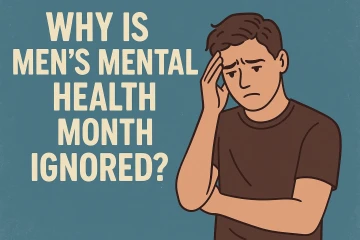
Ask many men how they're doing and you'll hear the same two words: "I'm fine."
Sometimes that's true. But often "I'm fine" is a habit, a shield or a way to end the conversation before anything uncomfortable comes up. Behind it there can be a man who has been running on empty for months: sleeping badly, snapping at people he loves, dreading Monday mornings and feeling strangely numb.
This article looks at emotional exhaustion through the lens of gender. Why do so many men hide it, even from themselves? How does it tend to show up? And what can men, and the people around them, do about it sooner rather than later?
What Emotional Exhaustion is
Emotional exhaustion is the feeling of being drained, used up and unable to recover, even after rest. It's the central part of what psychologists call burnout.
Christina Maslach and Michael Leiter, two of the leading researchers in this field, describe burnout as a response to long-term stress at work with three key dimensions: overwhelming exhaustion, feelings of cynicism and detachment from the job, and a sense of ineffectiveness and lack of accomplishment (Maslach & Leiter, 2016, World Psychiatry).
In everyday language, that often sounds like:
- "I'm tired all the time, and sleep doesn't fix it."
- "I just don't care any more."
- "Whatever I do, it's never enough."
Burnout research focuses on work, but the same kind of exhaustion can come from long-term caregiving, financial pressure, family conflict or carrying responsibility for others without support.
Why Men Often Hide It
Many men grow up with clear, if unspoken, rules about what a "real man" does: he provides, he copes, he solves problems and he doesn't complain. These expectations can be sources of strength. But they can also make it hard to admit when something is wrong.
In an influential review, psychologists Michael Addis and James Mahalik looked at why men tend to seek professional help less often than women for a wide range of problems, including depression and stress. They pointed to traditional masculine norms such as self-reliance, emotional control and toughness. If a man believes he should solve his own problems and keep his feelings to himself, asking for help can feel like failing. Addis and Mahalik also stressed that context matters: men are more likely to seek help when the problem feels normal and common, when asking doesn't threaten their sense of who they are, and when the people around them make it acceptable (Addis & Mahalik, 2003, American Psychologist).
This is an important point. The problem isn't men themselves. It's the meaning that help-seeking carries in many families, workplaces and cultures. Change the meaning, and men can find it much easier to speak up.
How it Can Show Up Differently in Men?
Not every man will show emotional exhaustion in the same way, and these signs aren't unique to men. But because many men are taught to hide sadness and fear, exhaustion can come out through other channels:
- Irritability and anger. Snapping at family over small things, road rage, impatience at work.
- Withdrawal. Spending more time alone, avoiding friends, going quiet at home.
- Overworking. Working longer hours, as if stopping would let the feelings catch up.
- Numbing. More time on screens, more caffeine, smoking or other ways to switch off.
- Physical complaints. Headaches, stomach problems, tension and poor sleep, which can feel easier to talk about than stress.
- Cynicism. "What's the point?" about work, relationships or plans that used to matter.
Because these signs don't look like the classic picture of someone "struggling", they're easy to dismiss as a bad mood or a stressful patch. When they last for weeks, they deserve attention. If you'd like a fuller list, I've written about the depression symptoms men often hide.
What Men Can Do?
If you recognise yourself in this article, here are some practical first steps.
1. Name it honestly, to yourself first
Instead of "I'm fine", try finishing this sentence privately: "Honestly, right now I feel…" Tired, angry, flat, overwhelmed? Naming a feeling isn't weakness. It's information.
2. Look at your load, not just your effort
Exhaustion is often a sign that the load is too heavy for too long, not that you aren't trying hard enough. Write down everything you're currently responsible for. Ask: what can be delegated, delayed, simplified or dropped?
3. Protect the basics
Sleep, regular meals, movement and daylight are not luxuries. When they slip for weeks, everything else becomes harder. Choose one to protect first.
4. Tell one person
You don't need to tell everyone. Choose one trusted person, a friend, brother, partner or colleague, and say something simple: "I've been more worn out than I've been letting on." Many men find that the other person has been through something similar.
5. Treat professional help as a tool, not a verdict
Seeing a GP, counsellor or psychologist isn't an admission of failure. It's the same as seeing a physiotherapist for a bad back: using expertise to recover faster.
What Families and Friends Can Do?
If you're worried about a man in your life:
- Talk side by side. Many men find it easier to talk while walking, driving or doing something together than face to face.
- Ask twice. If he says "I'm fine", try a gentle second question: "You've seemed really tired lately. How are you actually doing?"
- Name what you've noticed without blame. "You've been working late every night and you seem flat" works better than "You're always angry."
- Make help ordinary. Talk about stress and support as normal parts of life. Stories of other men who've asked for help can make it feel less like an exception.
When to Seek Help?
Please seek professional help promptly if exhaustion or low mood lasts more than two weeks, gets in the way of work or relationships, or comes with hopelessness, heavy drinking or drug use. If someone talks about wanting to die or harm themselves, treat it as urgent: contact local emergency services or a crisis line straight away.
The Takeaway
"I'm fine" can protect a man from awkward conversations, but it can also keep him alone with a heavy load. Emotional exhaustion is common, understandable and treatable, and recognising it early is a sign of strength, not weakness. When families, workplaces and communities make it normal for men to say "I'm not fine," more men will get support before exhaustion turns into something harder to recover from.
References
- Addis, M. E., & Mahalik, J. R. (2003). Men, masculinity, and the contexts of help seeking. American Psychologist, 58(1), 5–14. https://doi.org/10.1037/0003-066X.58.1.5
- Maslach, C., & Leiter, M. P. (2016). Understanding the burnout experience: Recent research and its implications for psychiatry. World Psychiatry, 15(2), 103–111. https://doi.org/10.1002/wps.20311


 Amna Irshad

 Amna Zaheer