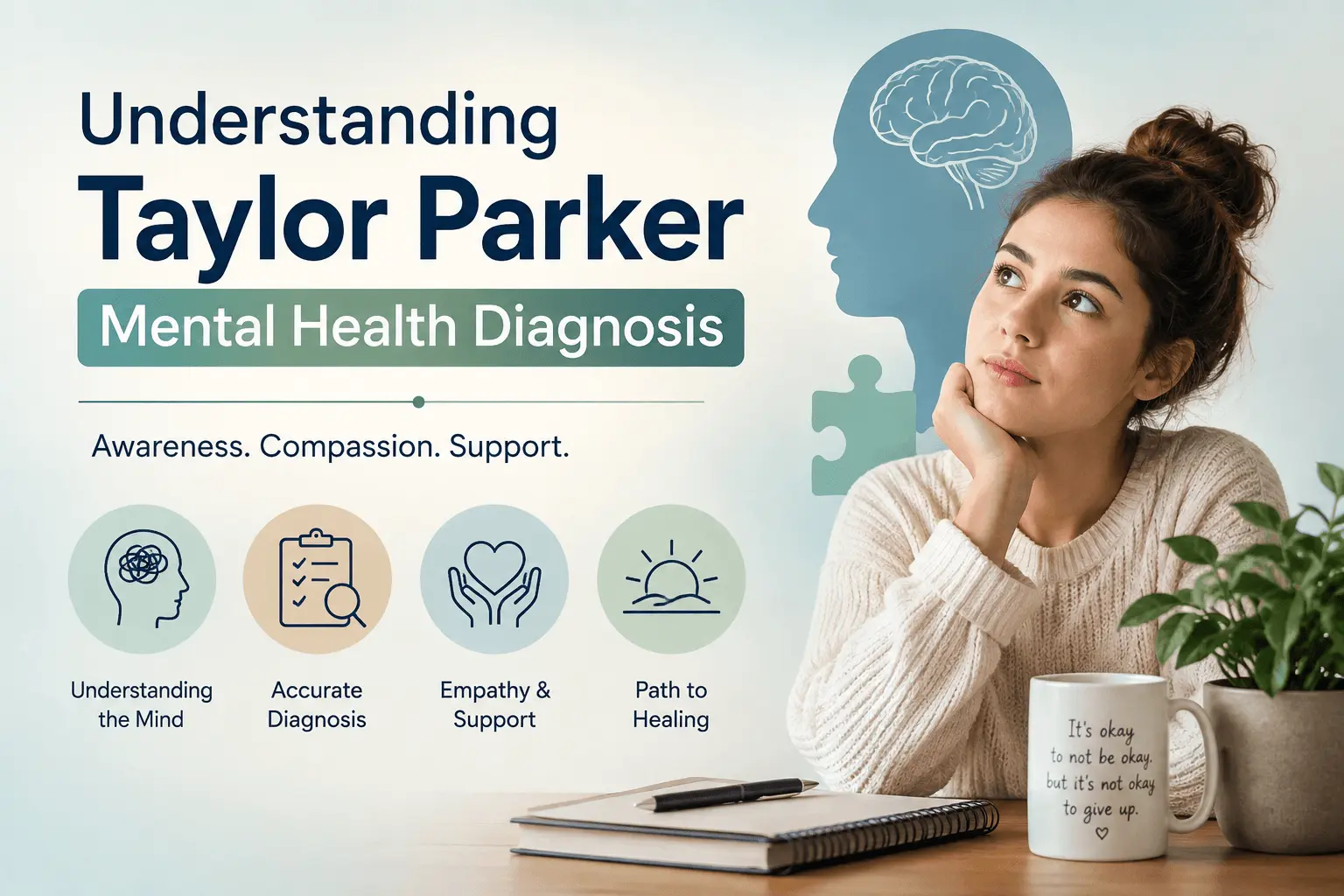
Many People searches for “Taylor Parker mental health diagnosis” often reflect a desire to understand whether an person has experienced mental health condition. However, mental health diagnoses are private medical information and cannot be accurately determined. Through online discussions, personal opinions, or public observations.
This process considers a person’s symptoms, personal history, emotional patterns.
Understanding how mental health diagnoses work can help people separate facts. From assumptions and encourage more responsible conversations about mental well-being.
What Is a Mental Health Diagnosis?
A mental health diagnosis is a professional assessment used to identify. Whether a person’s emotional, behavioral, or psychological experiences match the criteria.
Mental health professionals use diagnosis to better understand:
- A person’s emotional challenges
- Patterns in thoughts and behaviors
- Possible causes of distress
- The type of support that may help
It is a clinical tool that helps experts create a suitable approach for care and recovery.
Can Someone’s Mental Health Diagnosis Be Determined Online?
No. A person’s mental health condition cannot be confirmed by reading articles, watching videos, or analyzing behavior from the internet.
Online speculation can be misleading because:
Online Assumption
- A single behavior reveals a mental illness
- Emotional reactions always indicate a disorder
- Personality traits equal mental health conditions
- Public information shows the full picture
Professional Reality
- Diagnosis requires a complete evaluation
- Many emotions are normal responses to life events
- Personality and clinical disorders are different
- Mental health involves private experiences and history
Mental health specialists consider many factors before reaching any conclusion.
How Mental Health Professionals Make a Diagnosis
A mental health diagnosis involves an detail assessment better than quick decision.
1. Clinical Conversation & Interviews
The first step usually involve talking with an professional.
They may discuss:
- Current emotions and concerns
- Personal experiences
- Stress levels
- Relationships
- Work or school challenges
- Previous mental health history
These conversations help understand the person’s situation.
2. Reviewing Symptoms and Patterns
Mental health experts look for patterns that continue over time.
They may test:
- Mood changes
- Anxiety levels
- Sleep patterns
- Concentration problems
- Changes in motivation
- Emotional responses
- Behavioral changes
A single difficult moment doesn't automatically mean someone has an mental health disorder. Seniors look at consistency, severity, and impact.
3. Psychological Screening Tools
Professionals may use questionnaires or assessment tools to better understand symptoms.
These tools can help test concerns related to:
- Depression
- Anxiety & Stress
- Trauma
- Mood changes
However, screening tools are only one part of evaluation and not a replacement for specialist judgment.
Common Mental Health Conditions Professionals Evaluate
Mental health experts analyze many different condition depending on an person experiences.
Anxiety Disorders
Anxiety disorder involves intense or ongoing fear, worry and stress that affects everyday activities.
Possible symptoms include:
- Constant worrying
- Feeling restless
- Difficulty relaxing
- Physical tension
- Sleep problems
Treatment that may include therapy, coping strategies, lifestyle changes, or skilled recommendation.
Depression
Depression is a mental health condition that affects mood, thoughts, energy & daily routine.
Common signs may include:
- Persistent sadness
- Loss of interest in activities
- Low motivation
- Changes in sleep
- Feelings of hopelessness
Professional support can help individual. Understand their symptoms and explore suitable treatment options.
Post-Traumatic Stress Disorder (PTSD)
PTSD may develop after suffering or observing a traumatic event.
Possible symptoms include:
- Distressing memories
- Emotional reactions to reminders of trauma
- Avoidance behaviors
- Increased stress responses
Bipolar Disorder
Bipolar disorder involves significant changing in mood, energy, and activity levels.
An skilled assessment is an important because mood changes for many reasons and need careful evaluation.
Why Mental Health Diagnosis Should Be Handled Carefully
Mental health information is sensitive because incorrect assumptions can create harm.
Unverified diagnoses can:
- Spread misinformation
- Increase stigma
- Affect how people view someone
- Ignore the complexity of mental health
A responsible approach is to focusing on education and expert guidance.
Signs Someone May Benefit From a Mental Health Evaluation
A person may consider speaking with an mental health professional:
- Long lasting sadness or anxiety
- Difficulty managing everyday responsibility
- Major changes in sleeping or eating habits
- Problems maintaining relationships
- Feeling emotionally overwhelmed
- Loss of interest in activities they before enjoyed
Seeking help is a proactive step toward improving emotional health.
How to Get a Mental Health Diagnosis in the USA
People who want an expert mental health evaluation:
Licensed Therapists
Therapists provide support through counseling and help individually. Understand emotions, behaviors, and coping strategies.
Psychologists
Psychologists can provide psychological assessments and therapy for various mental health concerns.
Psychiatrists
Psychiatrists are medical doctors who specialize in mental health. They can evaluate conditions, provide treatment plans, and prescribe medication when appropriate.
Primary Care Providers
A primary care doctor can be a starting point for discussing concerns and receiving referrals to mental health specialist.
The Difference Between Self-Diagnosis and Professional Diagnosis
Many people search online because they recognize certain symptoms in themselves or others. While online resources can increase awareness, self-diagnosis has limitations.
Professional diagnosis provides:
- A complete evaluation
- Medical and psychological context
- Personalized recommendations
- Evidence-based support
Using reliable information is helpful, but professional guidance is essential for accurate assessment.
Final Thoughts
The topic of Taylor Parker mental health diagnosis highlights a broader conversation. How people understand mental health conditions and professional evaluations.
Mental health diagnoses should always be based on assessments, not assumptions. Learning how diagnosis helps create more informed, respectful, and supportive conversations.
Whether someone is dealing with stress, anxiety, depression, or other emotional challenges. Looking an professional guidance can be an important step toward better mental well-being.


 Sophie Calder


Comments
Share your thoughts or experience about this article.
Leave a Comment
This was a helpful explanation of mental wellbeing. I especially liked the section about recognizing changes in everyday routines.
I appreciate how this article explains that wellbeing can change over time. The information is clear and easy to understand.
Good article. The reminder about seeking professional support when problems start affecting everyday life is important.