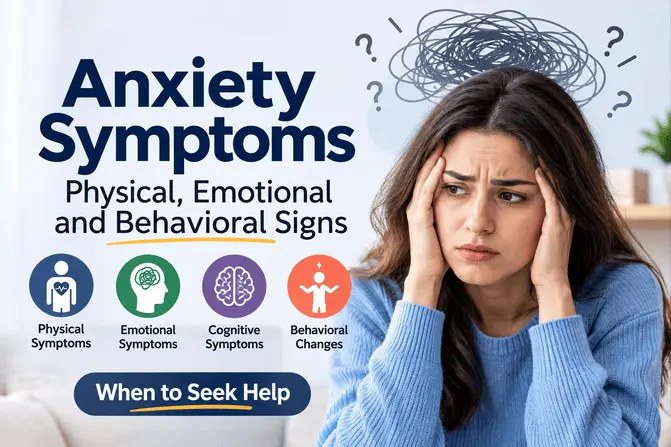
Anxiety does not always feel like worry. Sometimes it appears as a racing heartbeat, tense muscles, poor sleep, or difficulty concentrating. These changes can affect how a person feels, thinks, and behaves throughout the day.
Recognizing anxiety symptoms can help people understand what they are experiencing and when to seek support. Symptoms vary from person to person, and not everyone experiences them in the same way.
What Are the Common Symptoms of Anxiety?
Anxiety can affect the body, emotions, thoughts, and everyday behavior. Some people mainly experience physical discomfort, while others struggle with constant worrying or restlessness.
Common symptoms include:
-
Feeling nervous, tense, or restless
-
Excessive or repeated worrying
-
Rapid heartbeat or sweating
-
Difficulty concentrating
-
Muscle tension or headaches
-
Trouble sleeping
-
Avoiding situations that cause fear or discomfort
Experiencing one or more of these symptoms does not automatically mean someone has an anxiety disorder. Their frequency, intensity, duration, and effect on daily life also matter.
1. Physical Symptoms of Anxiety
Anxiety can trigger the body's natural response to a perceived threat. This response may cause noticeable physical changes, even when there is no immediate danger.
Common physical symptoms include:
-
Rapid heartbeat: The heart may beat faster or feel unusually strong.
-
Sweating and trembling: Some people experience sweaty palms, shaking hands, or trembling.
-
Shortness of breath: Breathing may become faster or feel uncomfortable.
-
Dizziness: A person may feel lightheaded or unsteady.
-
Muscle tension: The neck, shoulders, and other muscles may feel tight or painful.
-
Stomach problems: Anxiety can contribute to nausea, stomach discomfort, or changes in digestion.
-
Headaches: Ongoing tension and physical discomfort may contribute to headaches.
These symptoms can appear during anxious moments or continue when anxiety becomes persistent. However, physical symptoms can also have other medical causes. They should not automatically be attributed to anxiety.
2. Emotional Symptoms of Anxiety
Anxiety can influence emotional responses and make ordinary situations feel more difficult to handle.
Common emotional symptoms include:
-
Persistent nervousness: Feeling uneasy even when there is no obvious reason.
-
Irritability: Becoming frustrated or upset more easily than usual.
-
Restlessness: Finding it difficult to relax or feel comfortable.
-
Feeling overwhelmed: Struggling to manage everyday responsibilities or unexpected situations.
-
Fear of something bad happening: Expecting negative outcomes without clear evidence.
-
Emotional sensitivity: Feeling tearful or becoming upset more easily.
These feelings may become particularly difficult when they interfere with relationships, work, education, or other daily responsibilities.
3. Cognitive Symptoms of Anxiety
Anxiety does not only affect emotions. It can also change how people process information, make decisions, and respond to everyday challenges.
Cognitive symptoms include:
-
Excessive worrying: Repeatedly thinking about possible problems or negative outcomes.
-
Racing thoughts: Experiencing several thoughts at once, making it difficult to focus.
-
Difficulty concentrating: Struggling to pay attention during conversations, work, or studies.
-
Overthinking: Repeatedly reviewing past situations or worrying about future events.
-
Indecisiveness: Finding it difficult to make even simple decisions.
-
Expecting the worst: Assuming that situations will end badly, even without enough evidence.
For example, a person may repeatedly worry about making a mistake at work, even after completing a task successfully. This pattern of thinking can make it difficult to focus on other responsibilities.
4. Behavioral Symptoms of Anxiety
Anxiety can also change how people act and interact with others. Some behavioral changes may develop as a way to avoid uncomfortable feelings or situations.
Common behavioral symptoms include:
-
Avoiding situations: Staying away from places, activities, or events that create anxiety.
-
Seeking reassurance: Frequently asking others whether everything will be alright.
-
Social withdrawal: Reducing contact with friends, family, or colleagues.
-
Repeated checking: Constantly checking doors, messages, work, or other things to feel reassured.
-
Difficulty completing tasks: Delaying or avoiding responsibilities because of fear or worry.
-
Changes in daily routines: Struggling to maintain normal activities, hobbies, or responsibilities.
These behaviors may provide temporary relief, but repeated avoidance can interfere with relationships and everyday life.
When Should You Seek Help for Anxiety Symptoms?
Occasional anxiety is a normal human experience. However, persistent symptoms deserve attention when they become difficult to control or interfere with everyday activities.
Consider speaking with a qualified healthcare professional if:
-
Anxiety regularly affects your sleep.
-
Worry makes it difficult to concentrate or complete daily tasks.
-
You avoid important activities because of fear.
-
Physical symptoms occur repeatedly without a clear explanation.
-
Anxiety affects your relationships, education, or work.
-
Your symptoms are becoming more intense or difficult to manage.
A healthcare professional can assess your symptoms, consider possible physical causes, and determine whether further support is needed. New, severe, or unexplained symptoms such as chest pain or significant breathing difficulties should receive prompt medical assessment rather than being assumed to result from anxiety.
Final Thoughts
Anxiety can affect more than a person's emotions. It may influence physical health, thought patterns, behavior, and everyday responsibilities. Recognizing these symptoms is an important first step toward understanding what is happening.
Not everyone experiences anxiety in the same way, and having a few symptoms does not necessarily indicate an anxiety disorder. When symptoms persist or interfere with daily life, professional guidance can help identify the cause and appropriate support.
References
-
World Health Organization. Anxiety Disorders.
-
NHS. Anxiety, Fear and Panic.
-
National Institute of Mental Health. Anxiety Disorders.
-
National Institute of Mental Health. Generalized Anxiety Disorder: What You Need to Know.


 Amna Irshad