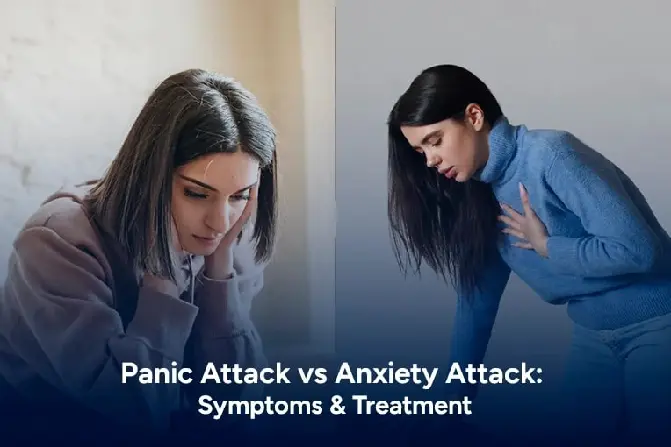
- Anxiety Attack vs Panic Attack: What's the Difference?
- What Is an Anxiety Attack?
- What Is a Panic Attack?
- How to Tell an Anxiety Attack From a Panic Attack
- What Causes Anxiety and Panic Attacks?
- How to Calm an Anxiety Attack or Panic Attack
- When Should You Seek Medical Help?
- How Are Anxiety and Panic Attacks Treated?
- Final Thoughts
- References
Anxiety and panic attacks can feel similar, but they often differ in how symptoms begin and develop. Anxiety usually builds gradually, while panic attacks cause sudden, intense fear and physical discomfort.
A panic attack is a clinically defined experience, while an anxiety attack is not an official medical diagnosis.
Understanding these differences can help you recognize symptoms, respond appropriately, and know when professional support is necessary.
Anxiety Attack vs Panic Attack: What's the Difference?
The main differences involve how quickly symptoms appear, their intensity, possible triggers, and how long they last.
Panic attacks usually reach their highest intensity within minutes, while anxiety symptoms may develop gradually and persist longer.
|
Feature |
Anxiety Attack |
Panic Attack |
|---|---|---|
|
Medical recognition |
Informal term |
Clinically defined |
|
Onset |
Usually gradual |
Sudden |
|
Intensity |
Mild to severe |
Typically intense |
|
Triggers |
Often linked to stress |
May occur with or without a trigger |
|
Duration |
Varies, sometimes lasting hours |
Usually peaks within minutes |
|
Common symptoms |
Worry, tension, restlessness |
Racing heart, shaking, intense fear |
These patterns can help explain your experience, but symptoms alone cannot confirm a diagnosis or exclude medical conditions.
What Is an Anxiety Attack?
An anxiety attack describes a period of heightened worry, fear, or tension that becomes difficult to manage.
It often develops in response to stressful situations, such as financial problems, workplace pressure, or personal concerns.
Unlike panic attacks, anxiety attacks are not formally recognized as separate conditions in the DSM-5-TR diagnostic manual.
Common Symptoms of an Anxiety Attack
Anxiety can affect both your thoughts and body, sometimes making ordinary activities feel more difficult than usual.
Common symptoms include:
-
Excessive worry or fear
-
Muscle tension and headaches
-
Restlessness or irritability
-
Difficulty concentrating
-
Rapid heartbeat
-
Stomach discomfort
-
Trouble sleeping
These symptoms may increase during stressful periods and gradually improve when the situation becomes easier to manage.
What Is a Panic Attack?
A panic attack is a sudden episode of intense fear or discomfort that reaches its peak within minutes.
It can happen unexpectedly, even when someone feels relaxed or cannot identify an immediate threat or stressful situation.
Some panic attacks occur during specific situations, while others happen without any obvious warning or recognizable trigger.
Common Symptoms of a Panic Attack
Panic attacks often cause strong physical sensations that can feel frightening, especially during someone's first experience.
Common symptoms include:
-
Racing or pounding heartbeat
-
Chest pain or discomfort
-
Shortness of breath
-
Sweating or trembling
-
Dizziness or lightheadedness
-
Nausea or stomach discomfort
-
Chills or hot flashes
-
Fear of losing control or dying
-
Feeling detached from reality
The symptoms can resemble serious medical problems, making professional evaluation important when their cause remains uncertain.
How to Tell an Anxiety Attack From a Panic Attack
The most useful clues are how symptoms begin, how quickly they intensify, and whether stress is involved.
Anxiety often develops alongside ongoing worries, while panic attacks produce a sudden surge of intense physical symptoms.
What Does Each Experience Feel Like?
Imagine worrying about an important presentation and gradually experiencing tension, stomach discomfort, and difficulty concentrating throughout the day.
This pattern may describe heightened anxiety because the symptoms develop alongside an identifiable source of stress.
Now imagine sitting comfortably when your heart suddenly races, breathing becomes difficult, and overwhelming fear appears within minutes.
This experience may resemble a panic attack, although similar symptoms can also have other medical explanations.
Can Anxiety Trigger a Panic Attack?
Yes, intense anxiety can sometimes contribute to a panic attack, particularly when fear and physical discomfort increase.
However, panic attacks can also occur unexpectedly, without an obvious trigger or a preceding period of anxiety.
What Causes Anxiety and Panic Attacks?
Anxiety and panic can develop through a combination of psychological, biological, environmental, and individual factors.
Common contributing factors include:
-
Ongoing stress at work or home
-
Major life changes
-
Family history of anxiety or panic
-
Certain medical conditions
-
Excessive caffeine or stimulant use
Anxiety is often associated with ongoing concerns, while panic attacks may occur during stressful or seemingly ordinary situations.
Not everyone experiences the same triggers, and identifying personal patterns may help guide appropriate professional treatment.
How to Calm an Anxiety Attack or Panic Attack
Simple calming techniques may help reduce distress during anxiety or panic, although they cannot replace appropriate medical care.
What to Do During an Episode
If you recognize familiar anxiety or panic symptoms, these steps may help you feel more comfortable.
-
Slow your breathing: Breathe gently and steadily, without forcing deep breaths or trying to control every sensation.
-
Focus on your surroundings: Notice familiar objects, sounds, and physical sensations to bring your attention toward the present moment.
-
Find a comfortable place: Sit somewhere quiet when possible and allow yourself time to settle without unnecessary distractions.
-
Use grounding techniques: Identify five things you see, four you feel, three you hear, two you smell, and one you taste.
-
Remind yourself symptoms can pass: If a clinician has identified your episodes as panic attacks, remember that their intensity usually decreases.
These techniques may ease discomfort, but unfamiliar or severe physical symptoms should never automatically be attributed to anxiety.
When Should You Seek Medical Help?
Occasional anxiety is common, but repeated panic attacks or persistent worry may interfere with everyday activities and relationships.
Consider speaking with a healthcare professional when:
-
Panic attacks happen repeatedly.
-
Anxiety affects your sleep or concentration.
-
Fear prevents you from visiting certain places.
-
Symptoms interfere with work or relationships.
-
You constantly worry about experiencing another attack.
Seek emergency medical care for new or unexplained chest pain, severe breathing difficulties, fainting, or other concerning symptoms.
A healthcare professional can evaluate your symptoms and determine whether another medical condition requires attention or treatment.
How Are Anxiety and Panic Attacks Treated?
Treatment depends on your symptoms, their frequency, and whether a healthcare professional identifies an underlying anxiety disorder.
Common treatment approaches include:
Cognitive Behavioral Therapy (CBT): CBT helps people recognize unhelpful thinking patterns and develop healthier responses to anxiety and panic symptoms.
Exposure Therapy: Guided exposure helps people gradually face feared situations or sensations while reducing avoidance and distress.
Medication: Healthcare professionals may recommend medications, including SSRIs or SNRIs, depending on individual symptoms and medical history.
Lifestyle Changes: Regular exercise, sufficient sleep, stress management, and limiting caffeine may support recovery alongside professional treatment.
Treatment plans should reflect individual needs, and medication decisions should always involve a qualified healthcare professional.
Final Thoughts
The main difference between an anxiety attack and a panic attack involves symptom onset, intensity, duration, and clinical recognition.
Anxiety often builds gradually around stressful situations, while panic attacks usually involve sudden, intense fear and physical discomfort.
Both experiences can disrupt daily life, but effective treatment and coping strategies can help manage their impact.
If symptoms become frequent or difficult to manage, consider speaking with a qualified mental health professional.
References
The following five medical resources support the clinical definitions, symptoms, coping guidance, and treatment information discussed above.
-
National Institute of Mental Health (NIMH). Panic Disorder: What You Need to Know. Information about panic symptoms, diagnosis, causes, and treatment.
-
Cleveland Clinic. What's the Difference Between a Panic Attack and an Anxiety Attack?. March 9, 2026. Explains clinical terminology and symptom differences.
-
Mayo Clinic. Panic Attacks and Panic Disorder: Symptoms and Causes. March 14, 2026. Covers common symptoms and contributing factors.
-
National Health Service (NHS). Get Help With Anxiety, Fear or Panic. Guidance on recognizing symptoms and seeking appropriate support.
-
Mayo Clinic. Panic Attacks and Panic Disorder: Diagnosis and Treatment. March 14, 2026. Explains professional evaluation, psychotherapy, and medication options.


 Amna Zaheer