
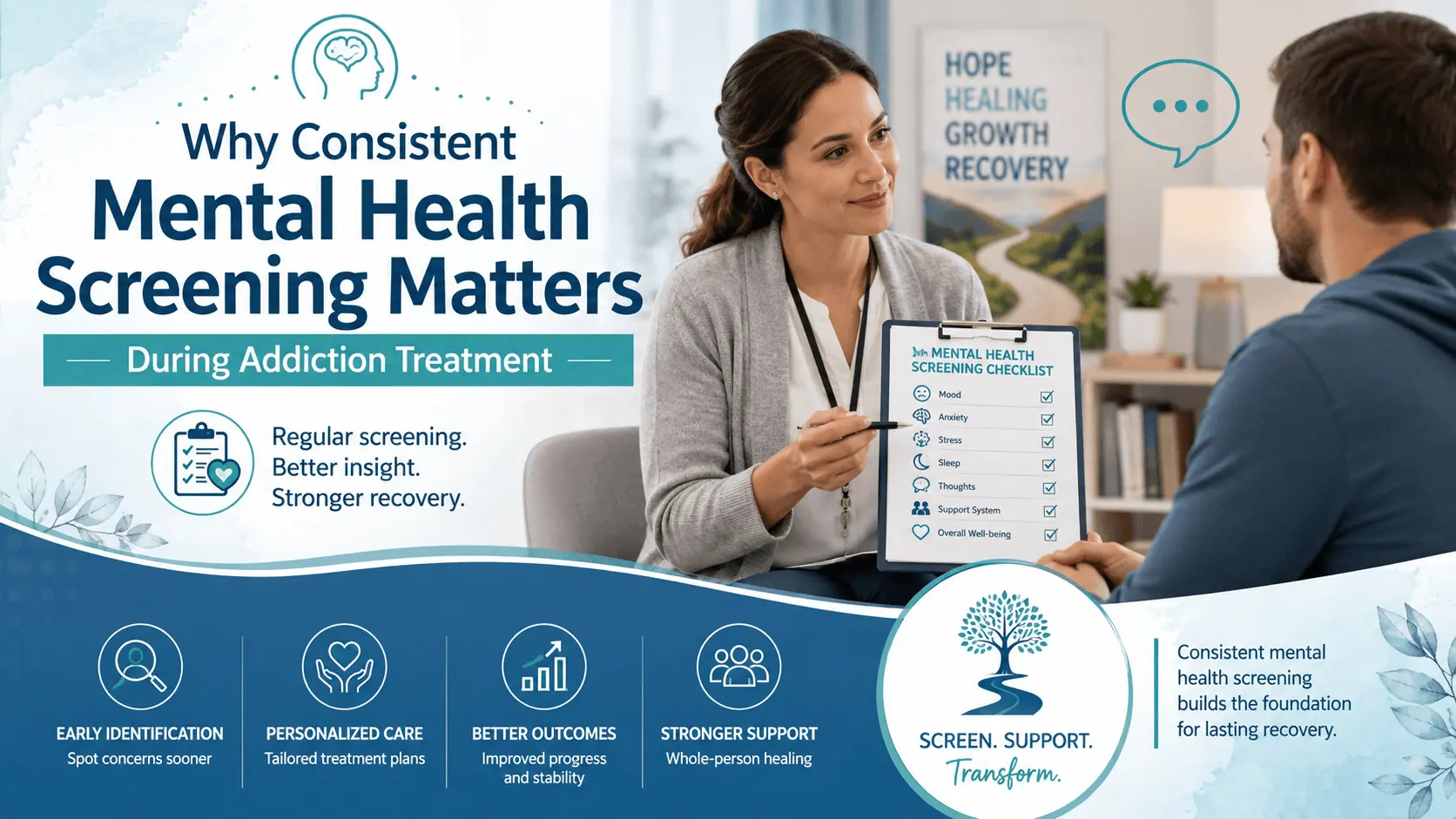
A mental-health screening at the start of addiction treatment can reveal important concerns, but it cannot answer every clinical question in a single conversation.
The first days of care often involve unfamiliar surroundings, interrupted sleep, physical discomfort, uncertainty, and the effects of recent substance use. Any of those factors can influence what a person reports and what a clinician observes.
That is why thoughtful treatment programs do more than screen once at admission and file away the result. They revisit mood, anxiety, trauma symptoms, sleep, thinking, safety, and day-to-day functioning as the person becomes more medically and emotionally stable.
Repeated screening is not a sign that the first clinician made a mistake. It is a way to make the treatment plan more accurate as clearer information becomes available.
Screening, Assessment, and Diagnosis Are Different
A screening is a brief check for signs that a condition may be present. It may use a standardized questionnaire, a short interview, or both. A positive result means the concern deserves a closer look. It does not, by itself, establish a diagnosis.
An assessment is broader. It brings together the screening results, current symptoms, medical history, substance-use patterns, medications, family history, social circumstances, and the person's own goals. A diagnosis is a clinical conclusion based on that fuller picture and the applicable diagnostic criteria.
Keeping those terms separate matters. A screening can identify a possible need quickly, while a comprehensive assessment helps the treatment team understand what may be driving the symptoms and what kind of care is appropriate.
Why the First Snapshot May Be Incomplete
Admission is an important checkpoint, but it is also a complicated moment. Someone may be intoxicated, entering withdrawal, exhausted, frightened, or focused on getting through the next hour. Others may minimize symptoms because of shame, fear of being judged, concern about medications, or uncertainty about how the information will be used.
Symptoms can also overlap. Poor sleep can affect concentration and mood. Withdrawal can involve anxiety, agitation, low mood, or changes in perception. Trauma-related distress can resemble generalized anxiety, and heavy substance use can worsen existing psychiatric symptoms.
Clinicians need time and observation to sort out what is temporary, what predates substance use, and what may require ongoing treatment.
A well-rounded early screening commonly explores:
- Recent alcohol and drug use, including timing, amount, and withdrawal history
- Depression, anxiety, trauma-related symptoms, and changes in mood or behavior
- Sleep, appetite, concentration, memory, and ability to complete daily tasks
- Current medications, physical health conditions, pain, and prior treatment
- Thoughts of suicide, self-harm, harm to others, or other immediate safety concerns
- Housing, relationships, legal stress, transportation, and available support
The Most Useful Times to Screen Again
After acute stabilization
As intoxication or withdrawal resolves and sleep begins to improve, a person may be able to describe symptoms more clearly. The treatment team can compare the new picture with the admission findings and decide whether the care plan needs to change. In some cases, symptoms fade with stabilization. In others, persistent depression, panic, trauma reactions, psychosis, or mood instability become easier to recognize.
While the treatment plan is taking shape
Trust often develops gradually. A person who gave short answers on day one may later disclose nightmares, a prior diagnosis, medication side effects, grief, or a history of self-harm. Clinicians can also observe patterns that a questionnaire alone may miss, such as rapid changes in mood, difficulty participating in groups, or severe anxiety in specific situations.
Before a change in level of care
Needs can change as treatment progresses. Before moving from residential care to a day program, or from an intensive outpatient program to less frequent visits, the team should reconsider symptoms, substance-use risk, medical needs, living conditions, and support. The American Society of Addiction Medicine describes regular reassessment as part of matching care to a person's evolving medical, psychological, and social needs.
Whenever symptoms or functioning change
New insomnia, a sharp drop in mood, increasing cravings, confusion, agitation, missed sessions, or a return to substance use should prompt a fresh clinical conversation. Reassessment may show that the current plan still fits, or it may point to a medication review, a medical evaluation, a different therapy, added family support, or a more intensive setting.
How Repeated Screening Supports Integrated Care
Mental-health and substance-use concerns frequently influence each other. Treating only one side can leave important triggers and barriers unaddressed. Repeated screening helps a team build an integrated plan instead of assuming that every symptom is caused by substance use or, in the other direction, that substance use is only a symptom of a psychiatric condition.
The practical goal is coordination. A counselor, medical provider, psychiatric professional, and case manager may each see a different part of the picture. When they compare observations, with the person's consent and within privacy rules, they can set priorities that make sense together.
When comparing programs, it can be useful to review how leading behavioral health treatment providers, such as Icarus Recovery Center describe dual-diagnosis treatment, then ask specific questions: When are screenings repeated? Who reviews the results? How can a result change the treatment plan? What happens if a person needs a service the program does not provide? Clear answers are more useful than a broad claim that a program treats everything.
What a Person Can Do to Make Screening More Useful
Screening works best as a conversation, not a test to pass. It is reasonable to ask why a question is being asked, who will see the answer, and what could happen next. If a person does not remember dates or details, saying so is better than guessing.
Bringing a current medication list, prior diagnoses, discharge summaries, and contact information for outside clinicians can help. With permission, input from a trusted family member may also clarify changes in sleep, behavior, safety, or functioning. The person receiving care should still remain central to the process.
Honesty about suicidal thoughts, hallucinations, severe withdrawal history, recent overdoses, or dangerous medication combinations is especially important. These details can affect immediate safety planning and the appropriate level of care.
What Screening Cannot Do?
No questionnaire can replace clinical judgment, a medical evaluation, or an ongoing therapeutic relationship. Screening tools also have limits across languages, cultures, literacy levels, ages, and settings. A score should be interpreted in context rather than treated as a label.
A negative screen does not mean a concern can never emerge, and a positive screen does not define a person. Results are one source of information among many. The best use of screening is to open the door to a more accurate, respectful discussion.
The Takeaway
A single admission screening is a starting point. Repeating the process after stabilization, during treatment planning, before transitions, and when symptoms change gives clinicians and patients a more reliable picture of what is happening. That clearer picture supports safer decisions, more individualized care, and better coordination between addiction and mental-health services.
References
American Society of Addiction Medicine. About the ASAM Criteria.
National Institute on Drug Abuse. Common Comorbidities With Substance Use Disorders Research Report.
U.S. Preventive Services Task Force. Unhealthy Drug Use: Screening.
Medical Disclaimer
This article is for general educational purposes and is not a substitute for individualized medical advice, diagnosis, or treatment. If you or someone else may be in immediate danger, call 911. In the United States, call or text 988 for crisis support.
Frequently Asked Questions
Why is mental-health screening important during addiction treatment?
Mental-health screening can identify concerns such as depression, anxiety, trauma symptoms, sleep problems, and safety risks that may affect addiction treatment.
Is one mental-health screening enough during addiction treatment?
No. Symptoms can change as intoxication or withdrawal resolves and a person becomes more stable, so treatment teams may repeat screening when clinically appropriate.
What is the difference between mental-health screening and diagnosis?
Screening identifies possible concerns that need further evaluation. A diagnosis requires a more comprehensive clinical assessment and consideration of symptoms, history, and diagnostic criteria.
When should mental-health screening be repeated during addiction treatment?
Screening may be repeated after acute stabilization, when treatment plans change, before transitions to another level of care, or whenever significant symptoms or functioning changes occur.
Can substance use cause symptoms that look like mental-health conditions?
Yes. Intoxication and withdrawal can cause symptoms such as anxiety, low mood, agitation, sleep problems, or changes in perception. Clinicians may need time and repeated assessment to understand their underlying causes.



Comments