
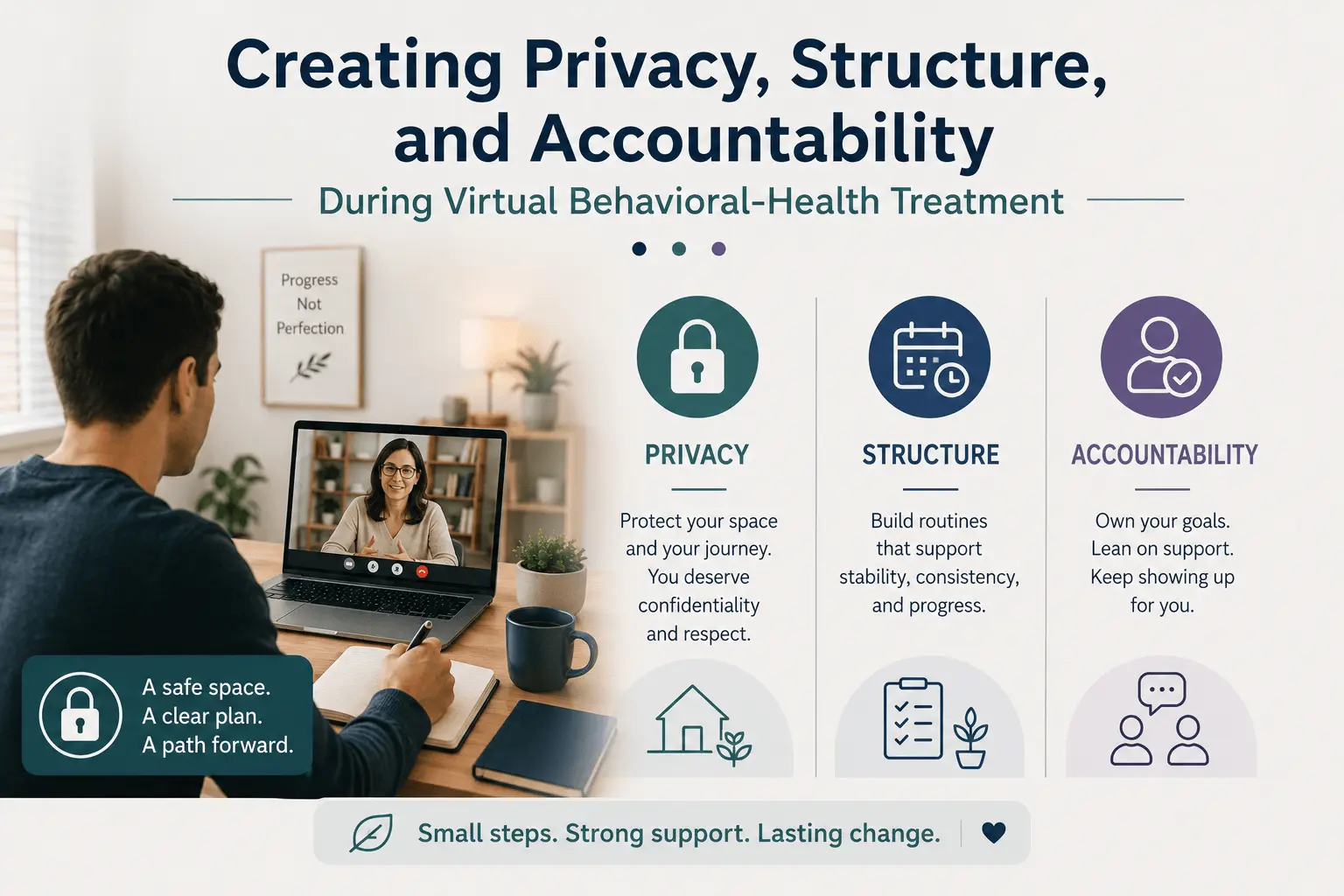
Virtual behavioral-health treatment can make care easier to access, but convenience alone does not create a therapeutic environment.
A person may still need to protect private conversations, follow a reliable schedule, complete work between sessions, and know what to do if a crisis occurs.
Those needs become especially important in a virtual intensive outpatient program, where several treatment hours may take place from home each week. With preparation, the home can support focused, consistent care.
Without it, interruptions, household stress, and technology problems can make participation harder.
Virtual Treatment Is More Than a Video Call
A well-run virtual program should have a defined clinical structure. Depending on the program and the person's needs, that may include group therapy, individual sessions, medication support, case coordination, recovery planning, and progress reviews.
The technology is the delivery method; the treatment plan, qualified clinicians, privacy practices, and clinical oversight are what make it care.
Before enrolling, ask how often sessions occur, which services are included, how attendance is handled, and what happens when the person's needs change. The program should also explain licensure, informed consent, communication between appointments, and its procedures for emergencies.
Create Physical Privacy
Behavioral-health sessions often involve sensitive information. A closed door is a start, but privacy also depends on sound, household routines, and who can enter the space. Talk with the people you live with before the first session and explain that treatment time cannot be interrupted except for a genuine emergency.
A practical privacy setup may include:
- A quiet room with a door, or another location where conversations cannot be overheard
- Headphones with a microphone, which limit what others can hear
- A sign, calendar block, or household signal that marks session time
- A camera position that does not reveal private information in the background
- Childcare, pet care, and work coverage arranged before longer groups
- A backup private location if the usual room becomes unavailable
Some people use a parked car, a private room at a trusted person's home, or another quiet space when home is not workable. Safety still comes first. Do not participate while driving, and avoid public settings where others can hear the conversation.
Also Read the Given Blog: Cognitive Behavioral Therapy (CBT) for Anxiety
Protect Digital Privacy
Use the platform and login method provided by the treatment program. A personal, password-protected device is preferable to a shared or public computer. Keep the device and browser updated, use a secured internet connection, and avoid public Wi-Fi when sharing health information.
Do not record sessions unless the program has explicitly addressed consent and applicable rules. Group treatment requires particular care because other participants' identities and stories are private. Screenshots, speakerphone use, and unannounced listeners can violate the trust that makes a group useful.
Ask the program where messages, worksheets, and appointment links should be sent. A secure portal may be more appropriate than ordinary email or text for sensitive information. If another person will join a session, tell the clinician in advance and follow the program's consent process.
Build a Treatment-Day Routine
Commuting to a clinic creates a natural transition into treatment. Virtual care requires creating that transition on purpose. Set an alarm, silence nonessential notifications, gather water and materials, and enter the private space 10 to 15 minutes early. A short routine signals that this time is different from browsing online or joining a work meeting.
Plan the period after treatment too. A group may bring up difficult emotions, and returning immediately to work, childcare, or conflict can be jarring. If possible, reserve a few minutes to walk, write down the next step, eat, or use a grounding skill before resuming the day.
Make Accountability Specific
Accountability should help a person follow through, not create shame. Vague goals such as "do better this week" are hard to measure. A more useful plan identifies the action, time, support, and way progress will be reviewed.
For example, a person might agree to attend all scheduled groups, complete one worksheet before the next individual session, take medication as prescribed, contact a peer before a high-risk evening, or follow a sleep routine on four nights. The clinical team can then review what helped and what interfered.
Family or friends can support the plan if the person agrees. Their role might be protecting quiet time, covering transportation for an in-person medical visit, joining a scheduled family session, or being an emergency contact. They do not need access to every therapy detail in order to be helpful.
Practice Between Sessions
Skills become useful through repetition. Keep the treatment plan and assigned exercises somewhere accessible but private. Schedule brief practice periods rather than waiting for a crisis. If a grounding technique, craving plan, or communication exercise does not work as expected, record what happened and discuss it with the clinician.
For people considering a California-based virtual program, reviewing how providers such as Shanti Recovery & Wellness describe virtual intensive outpatient care can help generate questions about weekly structure, clinician contact, group expectations, co-occurring mental-health support, and how progress is measured. Compare those answers with the person's clinical needs and schedule.
Prepare for Technology Problems
Test the camera, microphone, headphones, and internet connection before the first session. Keep the device charged and have the program's phone number available somewhere other than the meeting screen. Ask whether the clinician will call, whether the session can continue by phone, or whether it will be rescheduled if the connection fails.
A technology backup plan is also a safety plan. If someone is discussing suicidal thoughts, severe symptoms, or a return to substance use when the call drops, both the patient and clinician should already know how to reconnect and when to involve a local support person or emergency service.
Have a Local Emergency Plan
The U.S. Department of Health and Human Services recommends that telebehavioral-health providers confirm the patient's current location, local emergency numbers, an authorized nearby support person, and what to do if a session disconnects during a crisis. Patients should know these steps too.
Keep the nearest emergency department, local crisis service, trusted contact, and current medication list easy to find. Update the plan if you attend from a different location. Call 911 for an immediate emergency. In the United States, call or text 988 for crisis support.
Know When Virtual Outpatient Care May Not Fit
Virtual treatment is not the right setting for every moment. A person who may have a dangerous overdose, severe withdrawal, acute medical instability, imminent risk of harm, or symptoms that require continuous observation may need emergency, medical, or residential care rather than an online session.
An unsafe home, repeated inability to participate privately, or unreliable technology may also limit the benefit of virtual care. That does not mean treatment has failed. It means the setting should be reassessed. Ask how the program identifies changing needs and coordinates a referral when in-person or more intensive services are appropriate.
Questions to Ask Before Starting
A short list of practical questions can reveal whether a program is prepared to deliver consistent care:
- Are clinicians licensed to treat patients in the state where I will be located?
- How many hours of care occur each week, and which sessions are required?
- How are privacy, group confidentiality, attendance, and informed consent handled?
- What technology and private space will I need?
- What happens if my symptoms worsen or I need a service the program does not provide?
- How are medications, outside providers, family supports, and emergency contacts coordinated?
The Takeaway
Virtual behavioral-health treatment works best when the environment supports the clinical plan. Physical and digital privacy, a repeatable schedule, clear accountability, between-session practice, technology backups, and a local emergency plan all contribute. The right program should be able to explain how those pieces fit together and when a different level of care may be safer.
References
U.S. Department of Health and Human Services. Protecting Patients' Privacy in Telebehavioral Health.
U.S. Department of Health and Human Services. Creating an Emergency Plan for Telebehavioral Health.
U.S. Department of Health and Human Services. How Do I Protect My Data and Privacy?
American Psychological Association. Guidelines for the Practice of Telepsychology.
Medical Disclaimer
This article is for general educational purposes and is not a substitute for individualized medical advice, diagnosis, or treatment. Call 911 for an immediate emergency. In the United States, call or text 988 for crisis support.
Frequently Asked Questions
How can I create a private space for virtual behavioral-health treatment at home?
Choose a quiet room with a door, use headphones, limit interruptions, and let household members know when sessions are taking place to protect privacy.
What should I do if my internet connection fails during a virtual therapy session?
Have a backup plan in advance, such as a phone number to call, an alternative device, or instructions from the program on how to reconnect.
Is virtual intensive outpatient treatment as structured as in-person care?
Many virtual programs include scheduled group therapy, individual sessions, medication support, case management, and progress reviews, depending on individual needs.
How can I stay accountable during virtual behavioral-health treatment?
Set specific goals, follow a consistent routine, complete assigned activities between sessions, and regularly review progress with your treatment team.
When might virtual behavioral-health treatment not be the right option?
Virtual care may not be appropriate during severe withdrawal, medical emergencies, immediate safety risks, or situations where private participation is not possible.


Comments