
Millions of people struggle with anxiety every day. You're not alone if you're feeling overwhelmed by anxiety. Learning anxiety coping techniques can help you feel better. They allow you to take control of your life again.
This guide will show you easy ways to reduce anxiety. It will also explain effective techniques to manage it. If you live with an anxiety disorder or have occasional worries, these tips can help. They will guide you in understanding what's happening and what you can do about it.
Important Note: This guide shows you how to manage anxiety. However, it's not medical advice.
Always talk to a doctor or mental health expert about your specific situation.
Understanding Anxiety
What Anxiety Really Means
The Difference Between Normal Worry and Anxiety Disorders
Everyone feels nervous sometimes. Maybe you worry before a test or feel stressed about money. That's normal. But how do you know if you have an anxiety disorder? An anxiety disorder means your worry doesn't go away even when there's no real problem. It feels too big for what's actually happening, and it makes daily life really hard.
Normal worry goes away when the problem is solved. Anxiety disorders stick around and make you avoid things that shouldn't be scary.
What Anxiety Feels Like
When you're dealing with anxiety, your body and mind react in different ways:
Your body may show signs like a fast heartbeat, sweating, or shaking. You might feel tight muscles, headaches, stomach issues, fatigue, or have trouble breathing.
You might feel scared that something bad will happen. You could get upset easily or feel restless. Sometimes, you might feel frightened without a clear reason.
You might feel your thoughts racing. You could struggle to focus or worry constantly. You may think the worst will happen. It might even be hard to make choices.
Types of Anxiety Problems
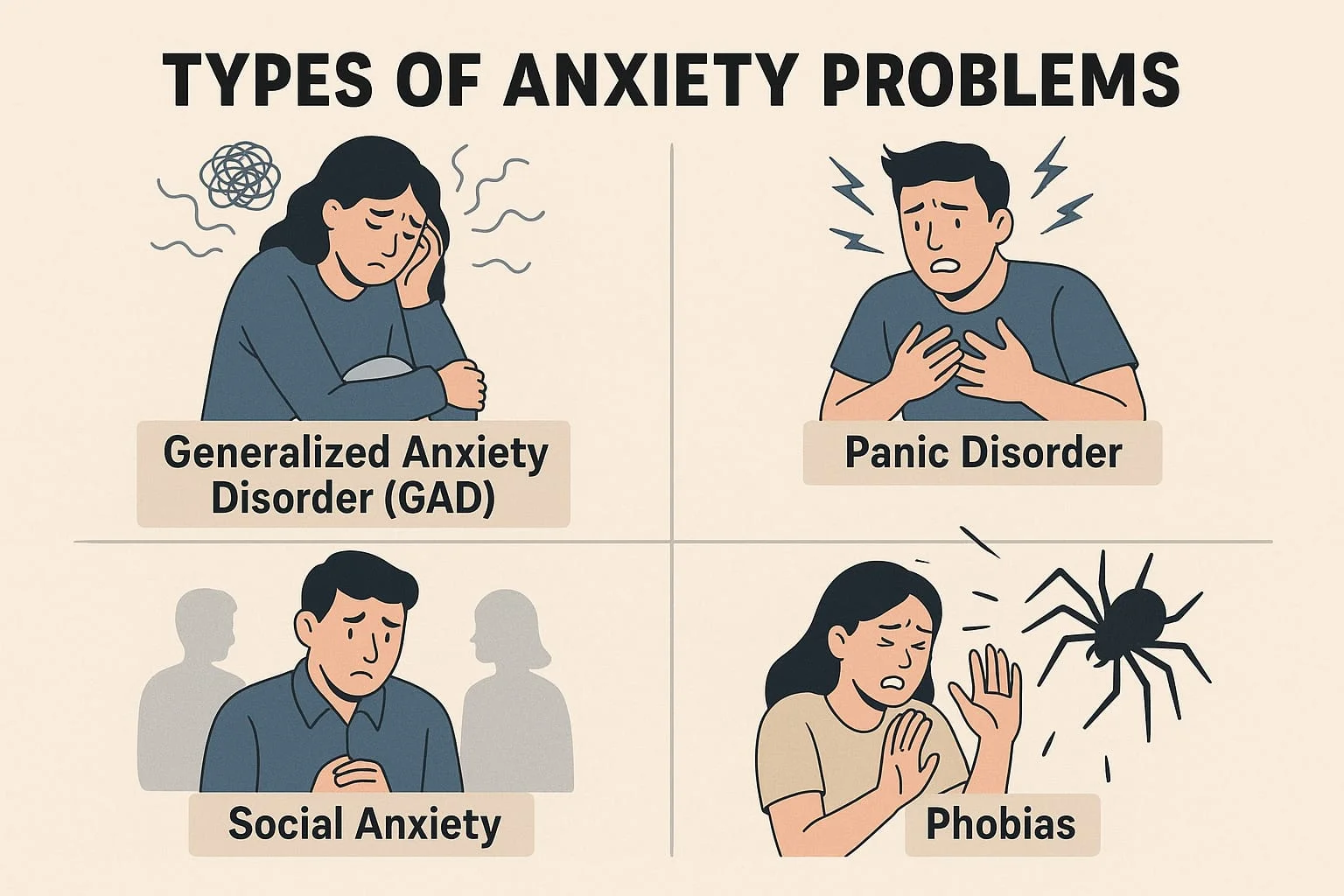
Generalized Anxiety Disorder (GAD)
People with GAD worry about everything. They worry about their health, money, work, and family all the time. This worry happens almost every day for months. They know the concern is too much, but they can't stop it.
Panic Disorder
This causes panic attacks, sudden bursts of intense fear. Your heart races so fast you might think you're having a heart attack. These attacks can happen without warning. Many people begin to avoid places where they've had panic attacks. This includes areas where they experienced panic attacks during sleep.
Social Anxiety
Social anxiety makes you really scared of what others think about you. You might be afraid of talking in groups, eating in front of people, or going to parties. This is way more than being shy.
Phobias
Phobias are intense fears of specific things. These can include heights, flying, spiders, or needles. The fear is much greater than the actual danger.
What Causes Anxiety Disorders
Things You're Born With
Anxiety often runs in families. If your parents or grandparents had anxiety, you might be more likely to have it too. Your brain chemistry also matters. Sometimes, the chemicals in your brain that control mood get out of balance.
Things Around You
Big life changes can trigger anxiety. Moving to a new place, changing jobs, facing relationship issues, or dealing with money problems can often trigger anxiety. Stress from work, caring for others, or health issues can lead to anxiety over time.
Bad Experiences and Daily Habits
Bad things that happened to you, especially when you were young, can lead to anxiety later. Too much coffee, lack of sleep, poor eating, and drug or alcohol use can all increase anxiety.
How Anxiety Affects Your Body and Mind
Your Body's Alarm System
When anxiety hits, your body turns on its danger alarm. We call this the fight-or-flight response. Your brain perceives danger and prepares your body to either fight or run. This worked well for our ancestors when they faced real dangers, such as wild animals. But now this alarm goes off even when there's no real danger.
Stress Chemicals in Your Body
Your body produces stress hormones, such as cortisol and adrenaline, when you're anxious. These chemicals speed up your heartbeat, boost your blood sugar for quick energy, and prepare you for action. Having these chemicals in your body all the time isn't healthy. This may help in real emergencies, but it can cause problems.
Worried Thinking Patterns
Anxiety makes you think in twisted ways. You might worry that the worst will happen. You may think one bad thing means everything is bad. It's easy to see things as all good or all bad. You might jump to conclusions without facts. Sometimes, you blame yourself for things that aren't your fault. This twisted thinking creates more anxiety.
Problems With Sleep, Friends, and Getting Things Done
Anxiety makes it hard to fall asleep and stay asleep. Poor sleep then makes anxiety worse. Anxiety hurts your friendships. It makes you cranky and want to stay home alone. You might seek constant reassurance and avoid fun activities.
You can't get as much done because anxiety makes it hard to focus, make decisions, and feel motivated. You spend time worrying instead of working.
Proven Ways to Cope With Anxiety
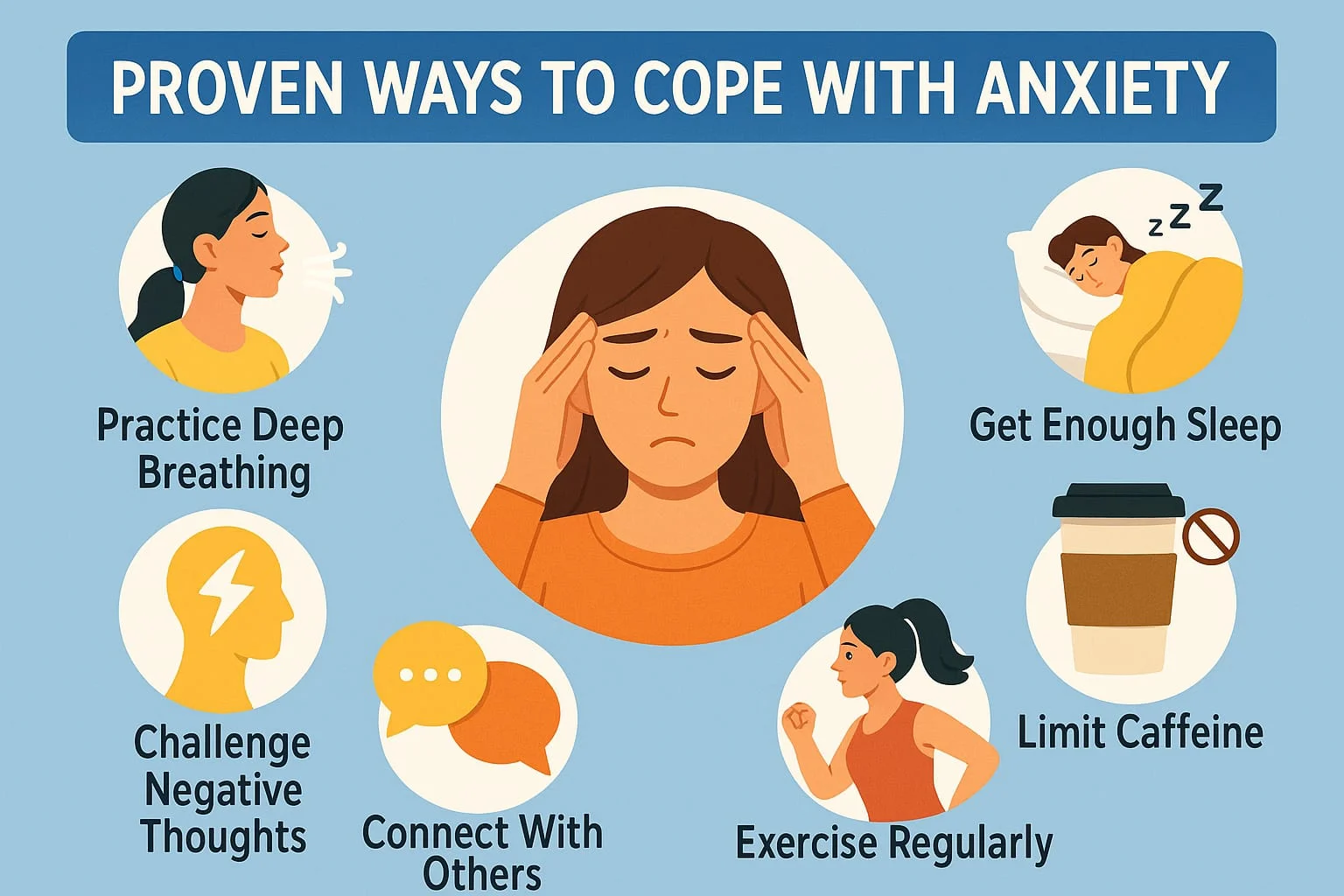
Quick Ways to Feel Better Right Now
The 5-4-3-2-1 Method
This quick tip works well for anxiety attacks or when you're very worried. It brings your attention back to right now instead of worrying about what might happen. Here's what to do during an anxiety attack:
- Name 5 things you can see around you.
- Touch 4 different things and notice how they feel.
- Listen for 3 sounds.
- Notice 2 things you can smell.
- Think of 1 thing you can taste.
This exercise helps you cope with anxiety by focusing on what's real right now.
Breathing to Calm Down
Learning how to calm nervousness and anxiety starts with your breathing. When you're anxious, you breathe fast and shallow. This makes you feel dizzy and tingly. Slow, deep breathing tells your body that it's safe.
To calm anxiety quickly, try this:
- Breathe in slowly through your nose for 4 seconds.
- Hold for 4 seconds.
- Exhale through your mouth for 6 seconds.
- Wait 2 seconds, then repeat.
The long breath out is most important.
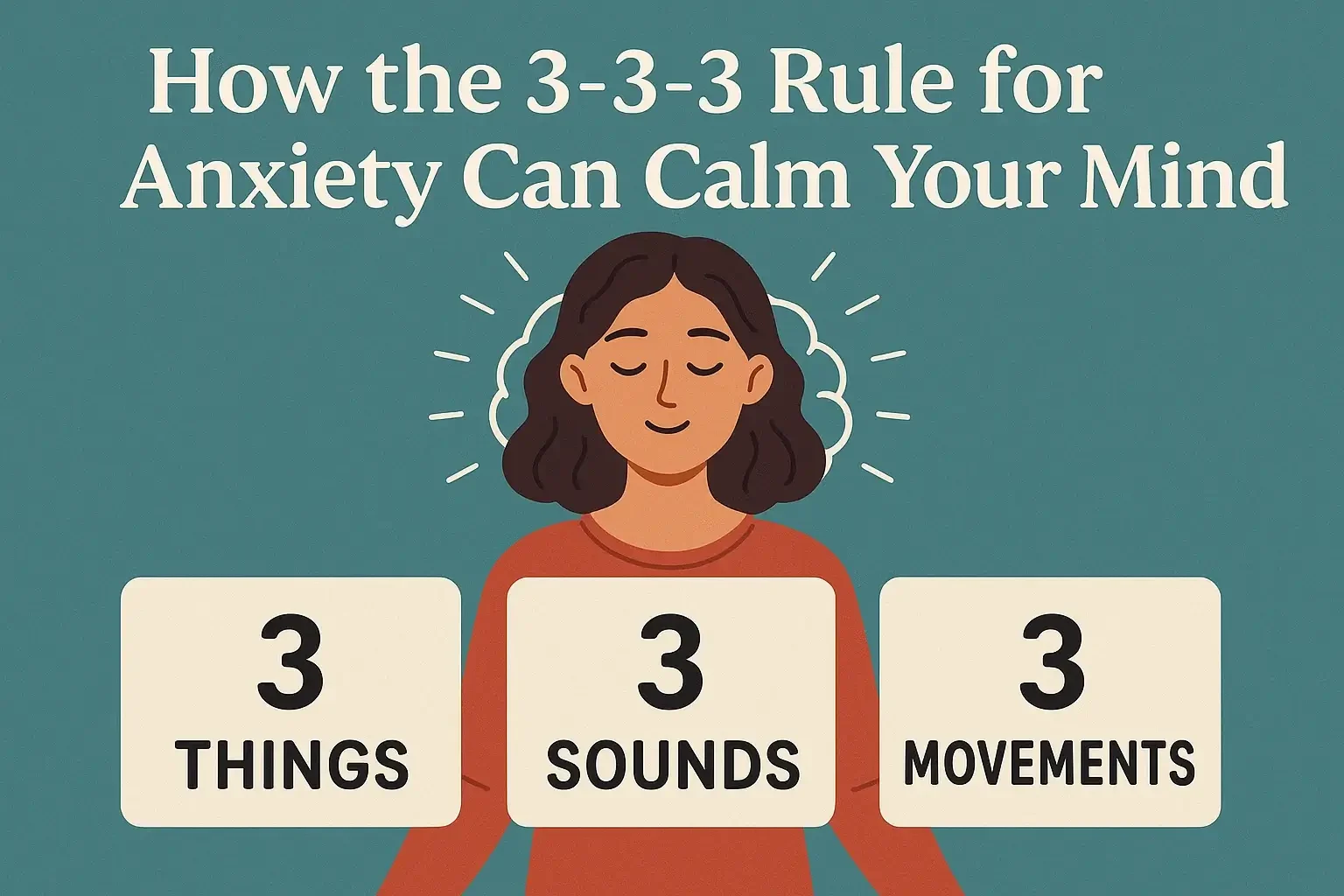
The 3-3-3 Rule
The 3-3-3 rule is one of the fastest 5 ways to deal with anxiety. Name 3 things you see, 3 sounds you hear, and move 3 body parts like your fingers, shoulders, or feet. This takes less than a minute but really helps.
Long-Term Ways to Handle Anxiety
Changing Your Worried Thoughts
A great way to handle anxiety is to question your worried thoughts. When anxiety makes you think something bad will happen, ask yourself: What proof do I have? What proof says this isn't true? Am I treating a thought like a fact? What would I tell a friend who thought this? Is there another way to see this?
These questions help you fight anxiety. They catch worried thoughts before they grow.
Writing Down Your Worries
Keeping an anxiety journal is great for managing anxiety. Write down what made you anxious, what you thought, how bad it felt, and what actually happened. Over time, you'll see that the bad things you worry about rarely happen. This is one of the most helpful anxiety and coping strategies.
Quiet Mind Practice
Learning to quiet your mind helps you live with an anxiety disorder. Notice anxious thoughts without trying to stop them. Don't let them control you. Only 10 minutes a day of quiet sitting and breathing can lower stress and anxiety.
Moving Your Body
Exercise is one of the best natural ways to cope with anxiety. Moving your body helps reduce stress. It creates feel-good chemicals, improves sleep, and channels nervous energy. You don't need hard workouts. Walking, swimming, yoga, or dancing all work great when done regularly.
Try to move for 30 minutes most days. Pick activities you actually like so you will keep doing them.
Life Changes That Help With Anxiety
Better Sleep Habits
Good sleep is super important for living with anxiety, but anxiety makes sleep hard. Here's how to sleep better:
- Go to bed and wake up at the same time every day.
- Make your bedroom dark, quiet, and cool.
- Don't look at phones or tablets for an hour before bed.
- Don't drink coffee after lunch.
- Do something relaxing before bed, like reading.
Eating and Drinking Right
What you eat affects how anxious you feel. These eating tips help:
- Eat regular meals to keep your energy steady.
- Eat fish, walnuts, and other foods with healthy fats.
- Eat leafy greens, nuts, and whole grains for magnesium.
- Eat enough protein.
- Drink plenty of water all day.
Less Coffee and Alcohol
Coffee makes your nervous system more active and can make anxiety worse. Limit yourself to one or two cups in the morning if you're dealing with anxiety.
Alcohol might seem to help at first, but it actually makes anxiety worse. It ruins your sleep, messes with anxiety medicine, and makes you more anxious when it wears off.
Daily Routines
Having the same routine every day helps when living with an anxiety disorder. Make regular times for waking up, eating, working, exercising, and sleeping. Include time for things you enjoy. Routines give structure and predictability that fight against anxiety's unpredictability.
Signs You Need to Talk to Someone
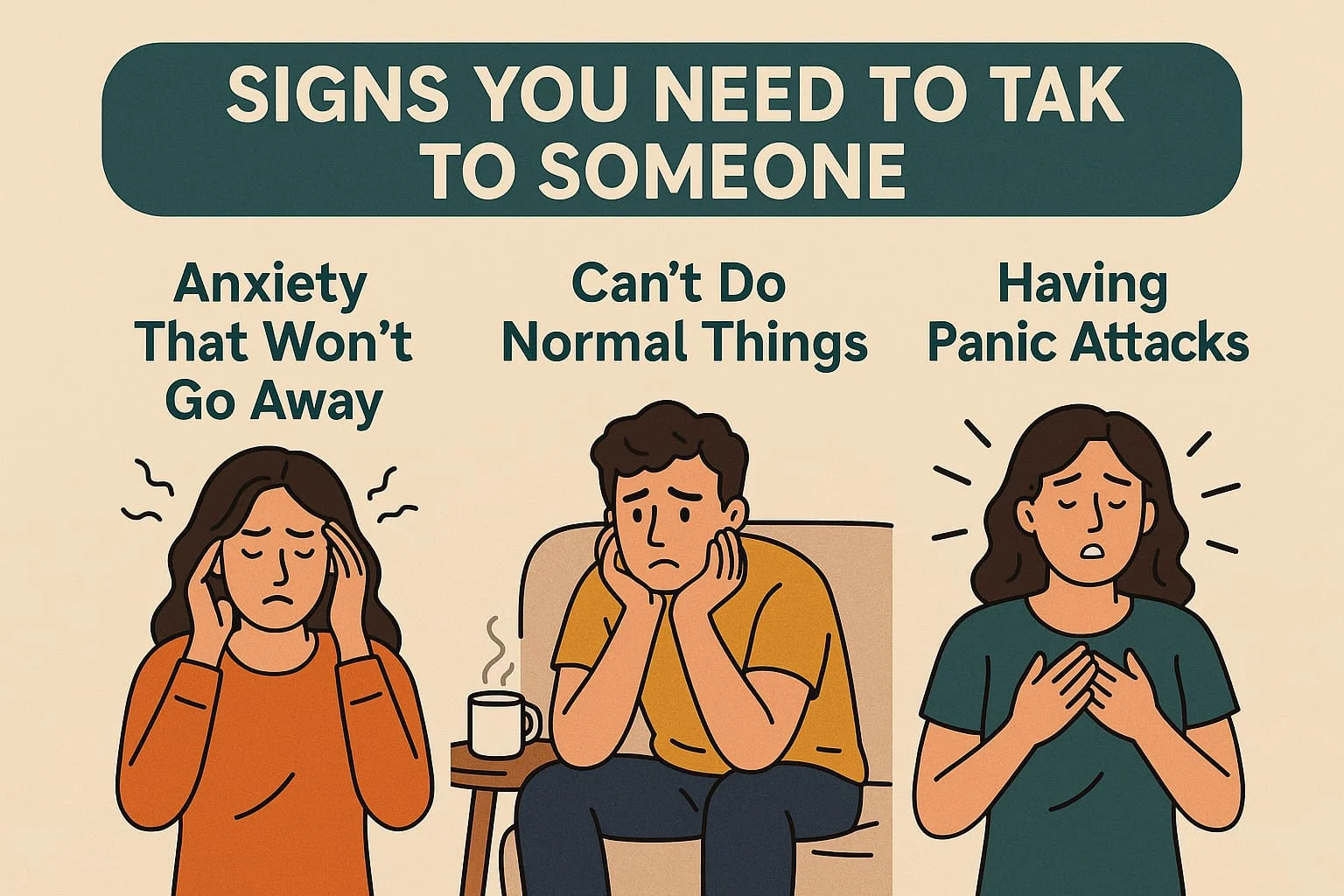
Anxiety That Won't Go Away
If your anxiety lasts for weeks, even when you try these anxiety tips, it's time to get help. Don't wait until anxiety is taking over your life before asking for support.
Can't Do Normal Things
If anxiety stops you from working, hanging out with friends, or taking care of yourself, you should get therapy. If you're missing work, skipping important events, or avoiding people due to anxiety, seek help.
Having Panic Attacks
If you're having panic attacks, especially a lot of them, see a mental health professional. They can figure out if you have panic disorder and help you handle severe anxiety.
Types of Helpers
- Psychologist: They provide therapy, test for anxiety, and teach coping skills.
- Psychiatrists: These doctors prescribe medication for severe anxiety and offer treatment.
- Therapist: They help you cope with anxiety through therapy sessions.
- Support Groups: These connect you with others facing similar anxiety challenges.
Getting therapy for anxiety is one of the best ways to handle my anxiety. These professionals teach you techniques to deal with anxiety that work.
Medicine for Anxiety
When Medicine Helps
You might need medicine for severe anxiety if:
- Your anxiety is very intense.
- It makes daily life difficult.
- Therapy alone isn't helping.
- You also have depression.
Types of Medicine
Doctors might suggest different medicines.
SSRIs are usually tried first. They take a few weeks to work, but are not addictive.
SNRIs work like SSRIs and also help with anxiety.
Other medicines, like Seroquel for anxiety disorder, might be used in some cases.
Fast-acting medicines provide quick relief. However, they are usually for short-term use since they can be habit-forming.
Being Safe With Medicine
Always work with a doctor when taking anxiety medicine. Never start, stop, or change the amount of medicine without first asking your doctor. Tell your doctor about all drugs and vitamins you take.
Handling Anxiety in Different Situations
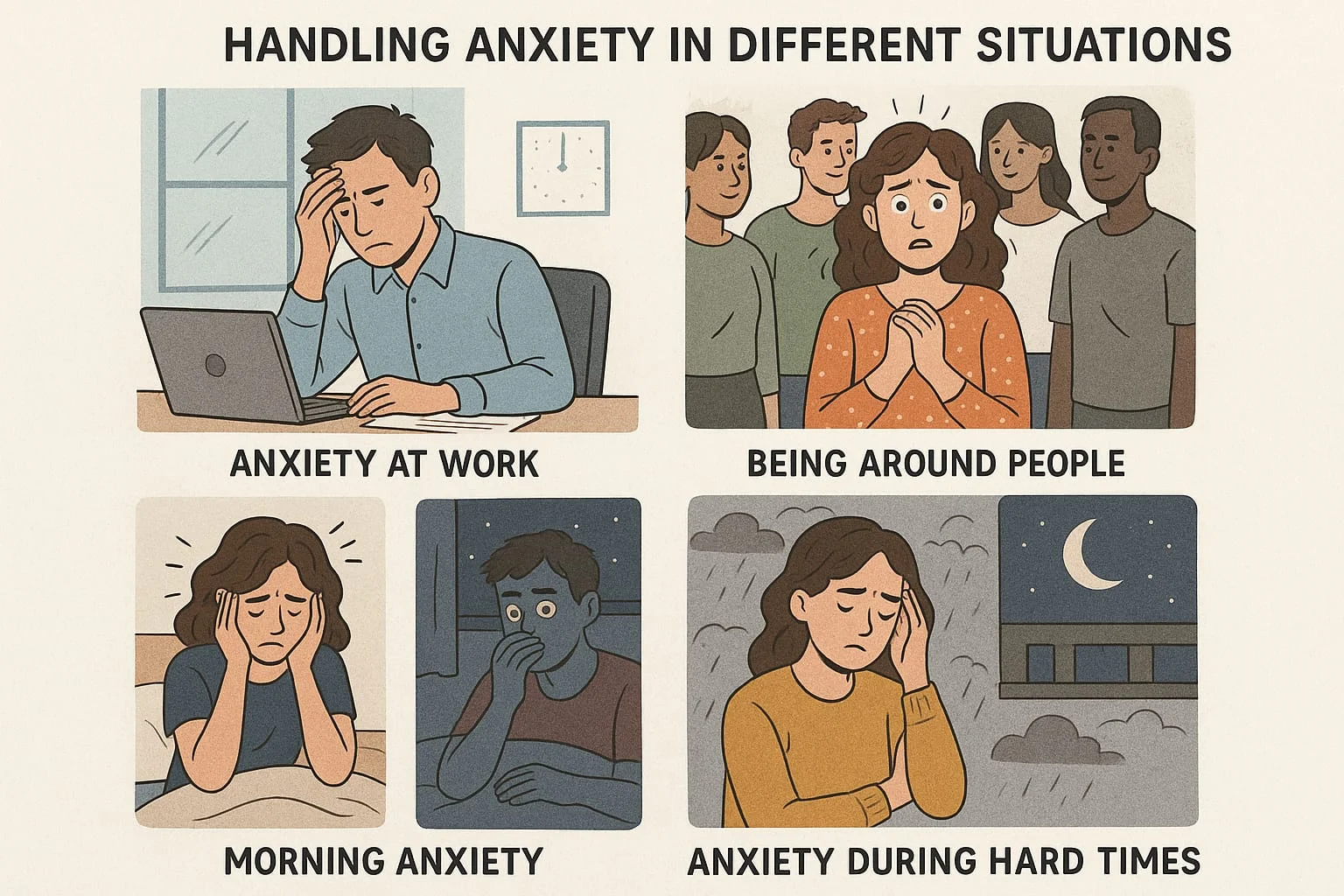
Anxiety at Work
Work anxiety comes from pressure to do well, problems with coworkers, or too much work. Break big projects into small tasks. Take breaks often. Share your limits with coworkers. Use calming techniques when you feel stressed.
Being Around People
Getting ready for social events helps. Start with small gatherings before big parties. Show up early so you're not walking into a crowded room. Think of things to talk about ahead of time. Remember that small mistakes don't matter as much as anxiety makes you think.
Morning Anxiety
Waking up anxious is common. Start your day calmly. Try gentle stretching, deep breathing, or quiet sitting first. Then, check your phone. Eat breakfast and don't rush into stressful stuff right away.
Nighttime Anxiety
Evening worry often involves racing thoughts about today or tomorrow. Start getting ready for bed an hour early. Write down worries to get them out of your head. Try muscle relaxation or calming sleep recordings.
Anxiety During Hard Times
Bad things, like health issues or money troubles, can cause anxiety. This makes everything feel harder. Focus on what you can control. Break big problems into small steps. Ask for help from doctors, financial helpers, or people who care about you.
Good and Bad Ways to Handle Anxiety
Good Ways
Relaxation Methods
Real relaxation techniques help reduce anxiety without causing problems. These include deep breathing, muscle relaxation, imagining peaceful places, meditation, and yoga. The more you practice, the better they work.
Help from people you trust
Talking to friends or family you trust helps you feel less alone. Share your feelings with people who listen without judging. Sometimes, talking about anxiety makes it feel less scary.
Taking Care of Yourself
Real self-care is about doing what really makes you feel better, not just distracting yourself. This could be hobbies, outdoor time, creative activities, or anything that adds meaning to your life.
Bad Ways to Avoid
Using Drugs or Alcohol
Using alcohol, drugs, or misusing medicine for anxiety can lead to bigger issues. These things might help for a moment, but make anxiety worse later and can lead to addiction.
Staying Away From Everyone
Hiding from people when anxious makes sense, but doesn't help. Being alone increases anxiety, removes support, and makes you believe you can't handle being around others.
Working Too Much or Avoiding Everything
Staying super busy or dodging what makes you anxious keeps you from learning healthy ways to cope with anxiety. Avoidance is fine now and then, but constant avoidance boosts anxiety and shrinks your life.
Helping Someone With Anxiety
How to Talk With Kindness
When someone tells you about their anxiety, listen without trying to fix it right away or saying it's not a big deal. Tell them you understand their anxiety is real and hard. Ask what kind of help they need instead of guessing.
What to Say and Not Say
Helpful Words Unhelpful Words "I'm here for you" "calm down" "How can I help?"
- "You're overreacting."
- "This must be really hard."
- "Others have it worse."
- "It's okay to feel anxious."
- "Stop worrying."
- "Do you want company or space?"
- "There's nothing to worry about."
Don't belittle their feelings. Provide clear answers and stay calm about their anxiety. They can't "stop worrying" any more than someone with a broken leg can "just walk."
When to Suggest Getting Help
If you notice someone's anxiety getting worse or they have trouble with daily tasks, kindly suggest they get professional help. If they mention self-harm, it's even more important to encourage them to talk to a professional. Offer to help them find resources or go with them to their first appointment.
Helpful Tools and Resources
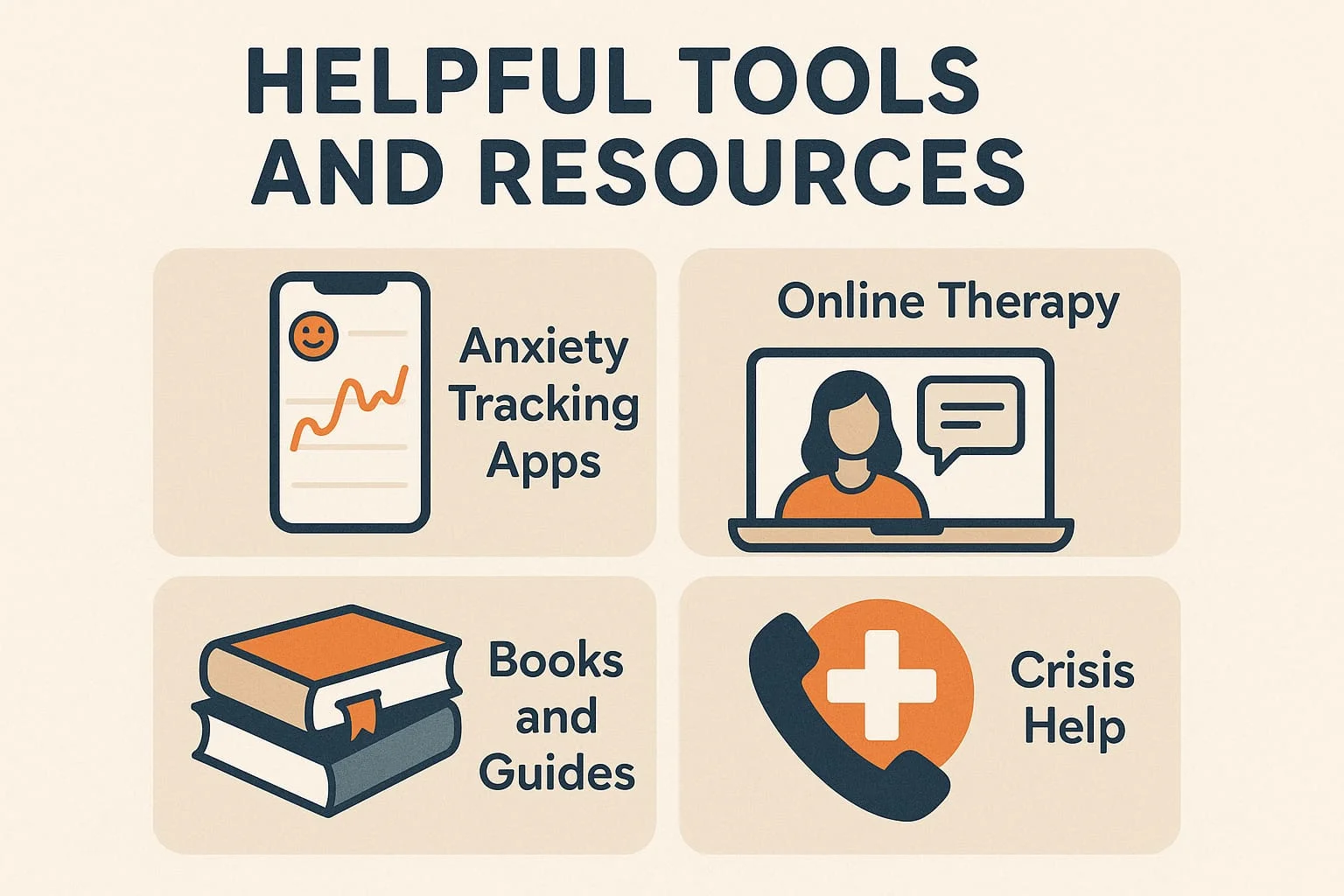
Anxiety Tracking Apps
Apps can track your anxiety, help you practice calming techniques, and connect you with support. Many free apps teach breathing exercises. They offer guided meditations and help you spot what triggers your anxiety.
Online Therapy
Online therapy platforms let you talk to licensed therapists from home. This helps if you live far from therapists, find it hard to leave home, or prefer video calls.
Books and Guides
Many workbooks teach anxiety and coping strategies that you can practice at home. These books explain anxiety in simple terms and give exercises to try. They work great alongside professional therapy or for mild anxiety.
Crisis Help
If anxiety becomes so bad that you think about hurting yourself, call a crisis helpline right away. These free services connect you with trained people who can help immediately. You deserve support, and help is available 24 hours a day.
Does anxiety ever go away?
Many people ask, "Can anxiety disorder go away?" The answer depends on the person. Some people fully recover, especially with proper treatment. Others learn to manage anxiety so well that it barely affects their life. You might not get rid of anxiety completely, but you can discover ways to manage it. These methods can really improve your life.
How long anxiety lasts varies. Some people have anxiety for a short time during a stressful period. Others live with an anxiety disorder for years but get much better with treatment. The key is not giving up and finding what works for you.
Questions People Often Ask About Anxiety
Do bananas help with anxiety?
Bananas contain vitamins and minerals that boost your mood. However, they won't cure anxiety on their own. Good nutrition helps.
Does acupuncture help with anxiety?
Some people find acupuncture relaxing and say it helps with their anxiety. Research shows mixed results. It's safe to try along with proven treatments.
Can anxiety cause a loss of appetite?
Yes, anxiety often makes people not want to eat. Stomach problems from anxiety can make food unappealing. Try eating small, easy meals.
What is crippling anxiety?
Crippling anxiety means anxiety so severe that it stops you from doing normal activities. You might not be able to work, leave home, or meet basic needs. This level requires professional help right away.
Conclusion
Learning how to cope with anxiety takes time and practice, but it absolutely works. No matter if it's your first time facing anxiety or you've had it for years, these techniques can help you feel better.
Remember that coping with anxiety isn't about being perfect or never feeling worried. It's about having tools to handle anxiety when it comes and not letting it control your life. Start small, be patient with yourself, and celebrate small wins.
If anxiety is taking over your life, please reach out for help. Talking to a doctor or therapist isn't a weakness. It's taking charge of your mental health. You deserve to feel better, and with the right support and coping skills to manage anxiety, you can.
Comments