
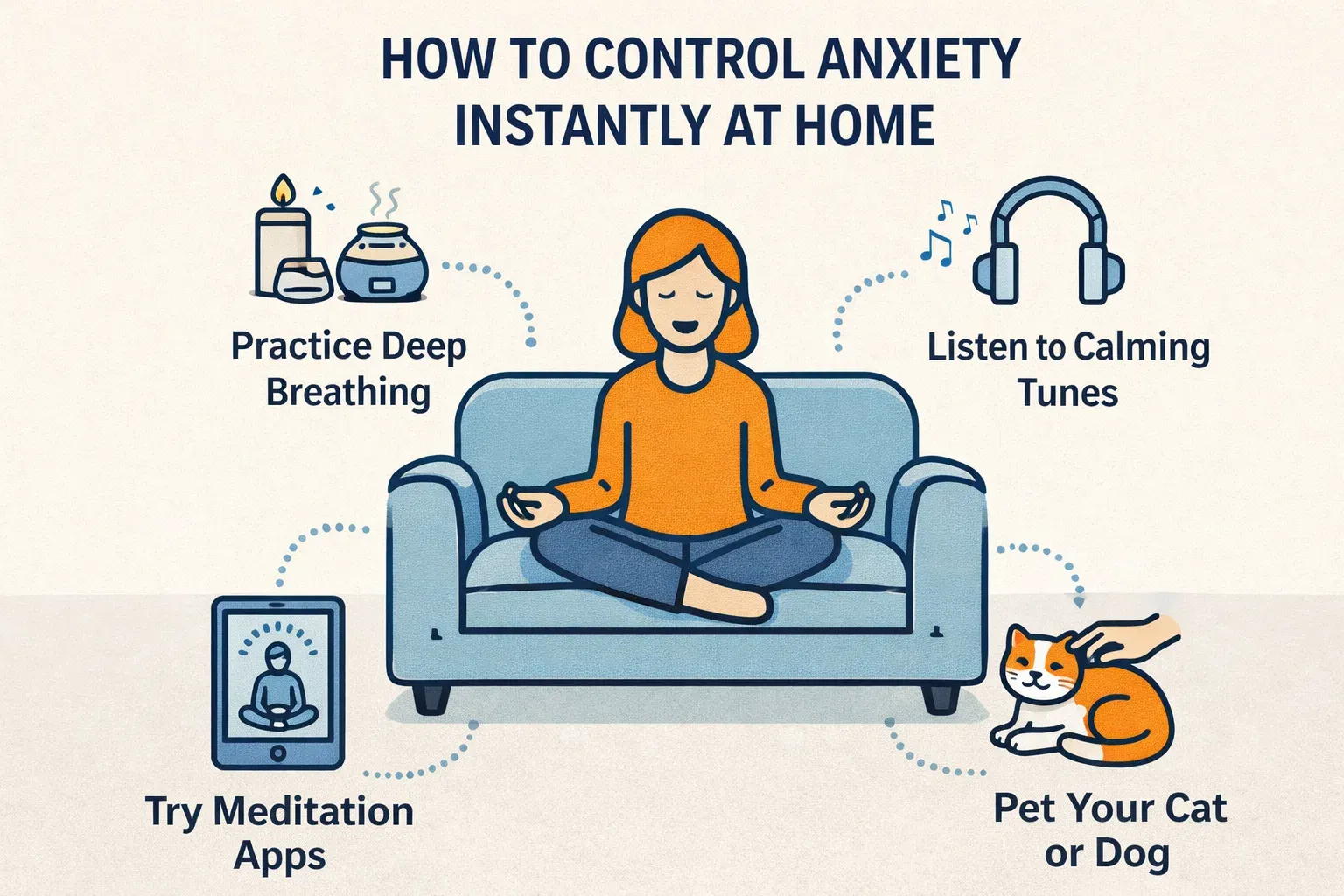
Imagine this: you're at the kitchen table, laptop open for a key video interview. Suddenly, the heart races. Palms sweat. The chest tightens. The room feels smaller. Within seconds, sudden anxiety threatens to derail everything prepared for weeks.
This scenario happens to millions of people daily. Anxiety doesn't wait for convenient moments. It strikes at home during work calls, family dinners, or quiet evenings. Controlling anxiety at home is key for handling those tough moments.
The National Institute of Mental Health (NIMH) reports that 19.1% of U.S. adults face anxiety disorders each year. In 2019, the World Health Organization estimated that 301 million people worldwide had an anxiety disorder. These numbers highlight how common anxiety is, yet many struggle to find effective ways to cope quickly.
This guide offers practical, science-based techniques for quick anxiety relief. If you deal with sudden anxiety or daily stress, these methods can help you take control quickly.
Understanding Anxiety: The Why Behind Instant Reactions
The Fight or Flight Response
When a person feels sudden anxiety at home, their body triggers an old survival instinct. The brain perceives a threat and triggers the fight-or-flight response instantly.
This reaction makes the body release stress hormones, such as cortisol and adrenaline. Heart rate increases, breathing becomes shallow and rapid, muscles tense, and digestion slows. Blood rushes to major muscle groups, preparing for action.
These physiological signs of anxiety made perfect sense when humans faced physical dangers. The same reaction happens now, even if the "threat" is just an email, a presentation, or a social situation.
Anxiety vs Panic Attacks
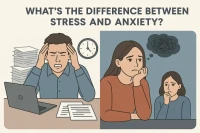
Understanding the difference between anxiety and a panic attack helps you pick the right techniques. General anxiety builds gradually and relates to specific worries or stressors.
Panic attacks strike suddenly with intense fear peaking within minutes. Physical symptoms feel overwhelming and frightening. Many people experiencing their first panic attack believe they're having a heart attack.
Knowing how to recognize a panic attack early allows for faster intervention. Common signs are a fast heartbeat, chest pain, dizziness, tingling, and feeling detached from reality.
Why Understanding Helps Control
One person experienced sudden anxiety every evening around 6 PM. They weren't sure what caused sudden anxiety at home. But tracking patterns showed that anxiety spiked after checking work emails post-dinner.
Understanding psychological triggers of anxiety empowers people to interrupt the cycle. When a person feels their anxiety response kick in, they can use calming techniques. This helps prevent symptoms from getting worse.
The biological response follows predictable patterns. Anxiety peaks, plateaus, then naturally decreases even without intervention. Knowing this helps reduce the fear of the anxiety itself.
Instant Anxiety-Relief Techniques at Home
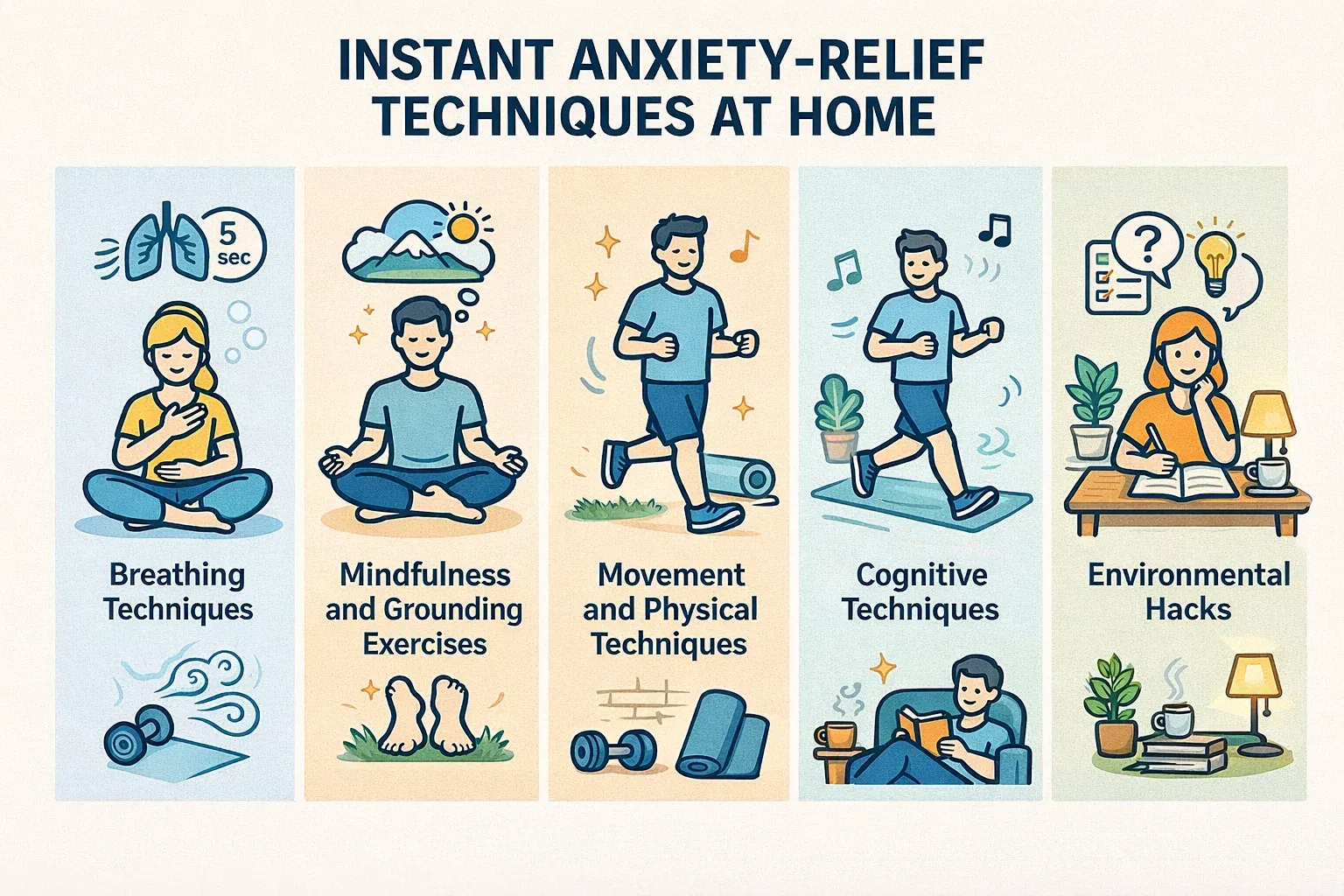
Breathing Techniques
- Deep Diaphragmatic Breathing
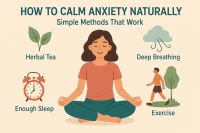
Deep breathing exercises help relieve anxiety quickly. They do this by activating the parasympathetic nervous system. This system tells your body to relax and counteracts the stress response.
Place one hand on your chest and one on your belly. Breathe in slowly through your nose. Let your belly rise, but keep your chest still. Exhale slowly through your mouth. Repeat for 5 to 10 breaths.
Diaphragmatic breathing can reduce cortisol levels and ease anxiety, according to research in PubMed. This simple technique provides fast anxiety relief with controlled breathing anywhere, anytime.
- 4-7-8 Breathing Method
The 4-7-8 breathing method for stress reduction follows a specific pattern. Breathe in through your nose for 4 counts. Hold for 7 counts. Now, exhale fully through your mouth for 8 counts.
This technique forces your body to slow down. The extended exhale activates relaxation responses. Research from the University of Arizona shows this method helps people fall asleep faster. It also quickly reduces anxiety.
Practice this breathing pattern 4 times when anxiety strikes. Many people notice immediate calming effects within one or two cycles.
- Box Breathing
Learning how to use box breathing to calm nerves involves equal counts for each breath phase. Imagine tracing a box as you breathe.
Inhale for 4 counts, hold for 4 counts, exhale for 4 counts, hold empty for 4 counts. Repeat this cycle 4-5 times. Navy SEALs use this technique to stay calm in high-stress situations.
The structured pattern gives your mind something to focus on besides anxious thoughts. This controlled breathing method provides reliable anxiety relief.
Mindfulness and Grounding Exercises
- 5-4-3-2-1 Grounding Technique
Grounding techniques can quickly shift your focus from anxious thoughts to what’s happening around you. The 5-4-3-2-1 method for panic attacks engages all five senses.
Name 5 things you can see around you. Identify 4 tangible objects. Notice 3 things you can hear. Recognize 2 things you can smell. Acknowledge 1 thing you can taste.
This quick meditation for anxiety relief grounds you in the present moment. Anxiety lives in the future, worrying about what might happen. Grounding pulls you back to now, where you're actually safe.
- Body Scan Meditation
Body scan meditation involves systematically relaxing each body part. Start at your toes, noticing any tension. Relax your feet, ankles, and calves. Then, move up through your whole body.
This mindfulness exercise for sudden anxiety at home typically takes 5-10 minutes. It helps identify where tension hides and facilitates its intentional release.
Many college students use body scans before online exams. They often discover that shoulders hold most tension. Specifically, relaxing that area when feeling anxious provides quick relief.
Movement and Physical Techniques
- Progressive Muscle Relaxation
Progressive muscle relaxation for panic attacks involves tensing and releasing muscle groups systematically. Clench your fists tightly for 5 seconds, then release and notice the difference. Move through major muscle groups.
This technique works because you can't be physically tense and mentally relaxed simultaneously. By deliberately creating and then releasing tension, your body learns what relaxation feels like.
The Anxiety and Depression Association of America says this method can lower anxiety symptoms with regular practice. It works even better for instant relief once your body learns the relaxation cues.
- Quick Home Stretches
Simple exercises to reduce anxiety instantly include gentle stretching. Anxiety creates physical tension that worsens mental distress. Breaking this cycle through movement helps tremendously.
Here are some home stretches to ease anxiety:
- Shoulder rolls
- Neck stretches
- Gentle twists
- Forward folds
Each stretch should feel good, never painful.
Movement also helps burn off excess adrenaline flooding your system during anxiety. Even 5 minutes of stretching shift your physiological state.
- Light Exercise or Yoga
Yoga poses for immediate stress relief combine movement, breathing, and mindfulness. Child's pose, cat-cow stretches, and legs-up-the-wall pose particularly help with anxiety.
Many people discover that 10 minutes of gentle yoga stop evening anxiety spirals. The combination of physical movement and focused breathing interrupts anxious thought patterns effectively.
Any movement helps when anxiety strikes. Walk around your home, do jumping jacks, or dance to a favorite song. Physical activity provides reliable anxiety reduction.
Cognitive Techniques
- Positive Self-Talk
Positive self-talk for anxiety control means replacing anxious thoughts with realistic, calming statements. Instead of "I can't handle this," try "I've handled difficult situations before, and I can handle this too."
Anxious thoughts often catastrophize or predict worst-case scenarios. Countering them with evidence-based reality helps to regain perspective quickly.
Keep a list of calming phrases that resonate with you. "This feeling is temporary," "I am safe right now," or "I can get through this" works for many people.
- Reframing Anxious Thoughts
Reframing anxious thoughts involves promptly challenging their accuracy. Ask yourself: Is this thought based on facts or feelings? What evidence contradicts this worry? What would I tell a friend who is thinking this way?
Cognitive Behavioral Therapy techniques teach systematic thought examination. Changing anxious thoughts quickly takes practice, but it becomes easier with time.
Anxiety tricks you into believing worst-case scenarios are certainties. Reframing reveals them as possibilities, not probabilities. This shift greatly diminishes the influence of anxiety.
- Quick Journaling Prompts
Journaling prompts for instant stress relief help externalize anxious thoughts. Writing them down removes them from your head, where they loop endlessly.
Try these prompts: "What am I actually worried about right now?" "What's the worst that could realistically happen?" "What's more likely to happen?" "What can I control in this situation?"
Writing down your thoughts often shows they aren't as scary as they seem in your head. This technique combines cognitive processing with physical action.
Environmental Hacks
- Adjust Lighting
Ways to calm anxiety with home environment changes start with lighting. Harsh overhead lights can increase stress. Dimming lights or using warm-toned lamps creates a calmer atmosphere.
Natural light exposure during the day helps regulate mood and anxiety. If you are experiencing anxiety at home, step near a window or go outside briefly when possible.
Some people find their anxiety improves significantly just by changing their lighting setup. This simple environmental change supports other calming techniques.
- Sound and Music
Using lighting and sound to reduce stress at home includes managing noise levels. Complete silence can amplify anxious thoughts for some people. Others need quiet to calm down.
Experiment with background sounds like nature recordings, white noise, or calming music. Binaural beats designed for anxiety relief help some people achieve quick calm.
Create a playlist specifically for anxious moments. Being prepared means one less choice to make when anxiety hits and decisions seem hard.
- Aromatherapy
Aromatherapy for fast anxiety relief uses scents to trigger relaxation responses. Research in complementary medicine shows that lavender, chamomile, and bergamot oils help lower anxiety.
Keep essential oils or scented candles accessible for quick use. Applying oil or lighting a candle offers a calming transition activity.
These home hacks to manage anxiety work best with breathing or mindfulness techniques. The multi-sensory approach addresses anxiety from multiple angles at the same time.
3 CBT Techniques for Anxiety That Provide Immediate Calm
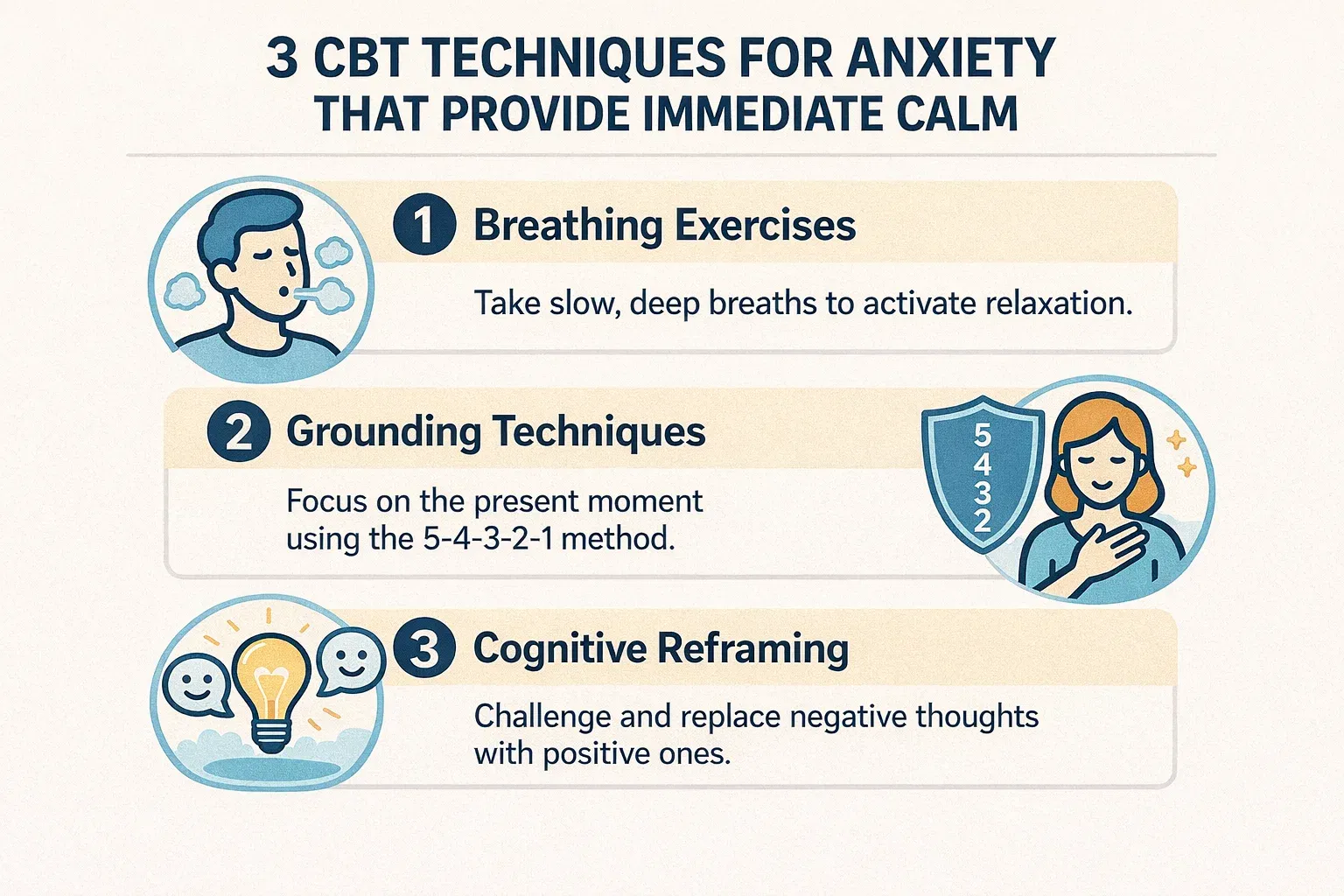
CBT Technique 1: Focusing on the Inevitable Shift in Feelings
A strong cognitive behavioral therapy technique for quick anxiety relief is to remember that feelings change. Anxiety feels permanent when you're in it, but emotions are temporary by nature.
Tell yourself: "This anxious feeling will pass. It always does." Looking at your watch and noting the time helps. Check again in 10 minutes and notice how the intensity has shifted.
This CBT strategy helps stop panic attacks at home. It works by giving perspective. You're not trying to force the anxiety away, which often backfires. You're simply acknowledging its temporary nature.
People who practice this technique report feeling less frightened by anxiety symptoms. The fear of anxiety often creates more anxiety. Breaking that cycle provides significant relief.
CBT Technique 2: Chew It Over and Act Normal
This behavior-based anxiety reduction method might sound odd, but it's remarkably effective. When anxiety hits, chew gum. Keep doing your usual activities as much as you can.
The act of chewing sends signals to your brain that you're safe. Eating behaviors don't usually occur in situations of genuine danger. Your brain receives mixed messages: anxiety says danger, but chewing suggests safety.
Acting in a typical manner despite anxiety teaches your brain that the situation isn't actually threatening. Here's how to use CBT for quick anxiety relief. Focus on behavioral feedback instead of thoughts.
Continue washing dishes, typing that email, or walking through your home. Movement along with regular activities breaks the anxiety cycle quicker than freezing or avoiding it.
CBT Technique 3: Catch the Underlying Assumption and Chase Logical Conclusions
Anxiety often rests on unstated assumptions. Using CBT to tackle anxious thoughts involves exploring your deeper fears beneath the surface worries.
Ask: "What am I assuming will happen?" Then push that assumption to its logical conclusion. "And if that happened, then what?" Keep asking until you reach the core fear.
Often, following the chain reveals the feared outcome is either unlikely or survivable. Someone worried about tripping over words in a presentation might fear getting fired. They might fear losing their home and becoming poor.
Seeing this chain written out shows how catastrophic anxiety makes a simple mistake seem. The actual consequence of stumbling would be minimal. This realization immediately reduces anxiety.
Preventive Habits for Long-Term Anxiety Control
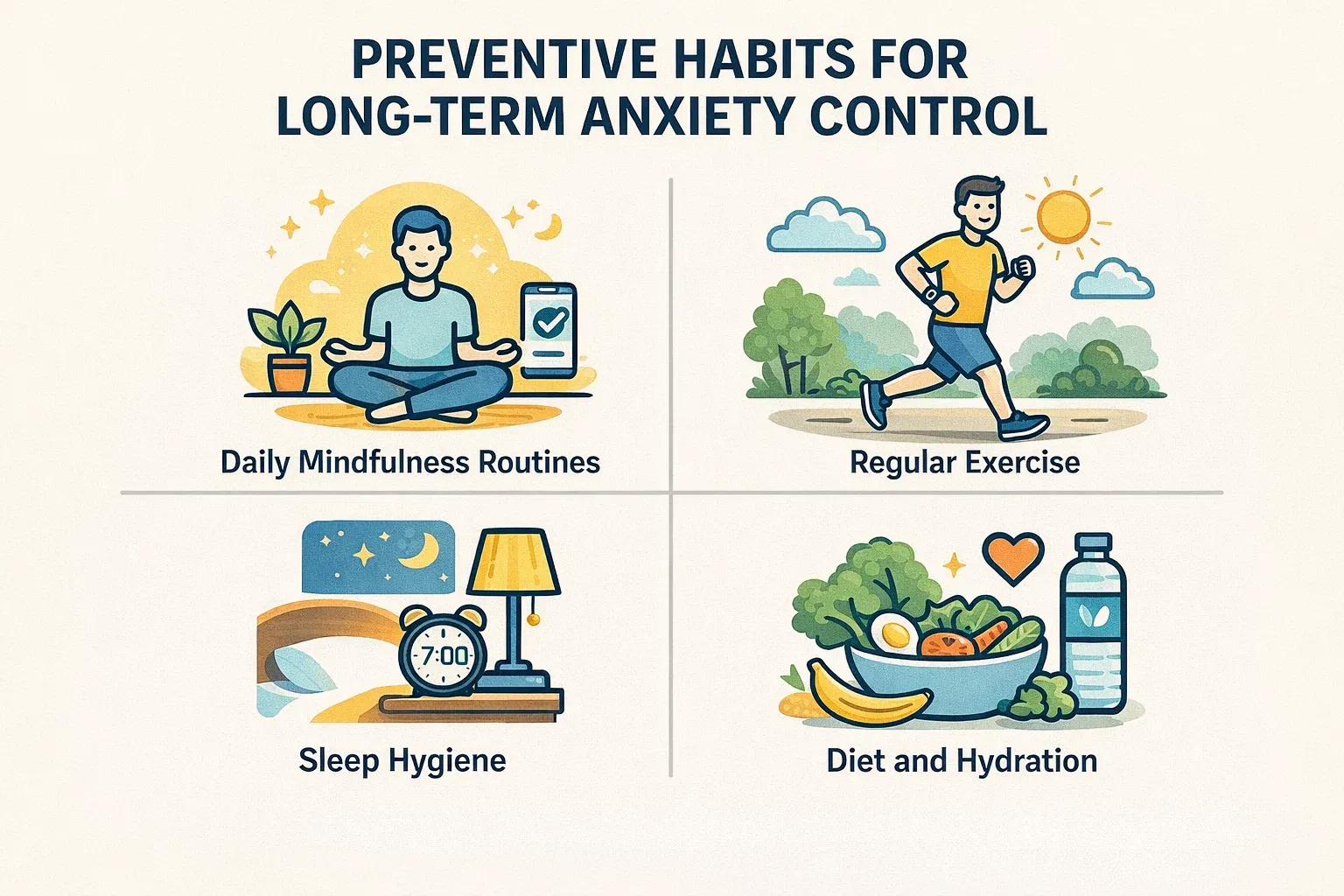
- Daily Mindfulness Routines
Mindfulness habits help prevent daily anxiety. They work best when practiced regularly, not only in tough times. Starting each day with 5-10 minutes of quiet breathing or meditation builds resilience.
These daily routines to prevent anxiety buildup create a calmer baseline. When anxiety strikes, you bounce back quickly. This is because you've practiced these techniques often.
Think of mindfulness practice like physical exercise. You don't wait until you're out of shape to start exercising. Practice anxiety management when you're calm. This way, the skills become automatic when you need them.
- Regular Exercise
To reduce chronic anxiety, try any movement you enjoy. Make sure you do it regularly. Walking, swimming, dancing, or strength training all provide mental health benefits.
Physical activity burns off stress hormones. It releases endorphins, boosts sleep quality, and gives you a break from worries. The CDC suggests getting 30 minutes of activity on most days.
Research from the American Psychological Association shows that regular exercise can be as effective as medication for managing anxiety in the long run. It's one of the most powerful lifestyle changes to control anxiety naturally.
- Sleep Hygiene
Quality sleep hygiene and mental health connect deeply. Poor sleep significantly increases vulnerability to anxiety. Anxiety also disrupts sleep, creating a vicious cycle.
Establish consistent sleep and wake times, even on weekends. Create a dark, cool, quiet sleeping environment. Avoid screens for an hour before bed. Limit caffeine after early afternoon.
Good sleep doesn't cure anxiety, but it simplifies the process of managing anxiety. When well-rested, your brain better regulates emotions and handles stress.
- Diet and Hydration
Diet and nutrition tips for managing anxiety focus on keeping blood sugar stable and ensuring proper nutrition. Skipping meals creates physical symptoms that mimic or trigger anxiety.
Eat regular, balanced meals with protein, healthy fats, and complex carbohydrates. Stay hydrated throughout the day. Dehydration can increase anxiety and worsen symptoms.
Limit caffeine and alcohol, as both can trigger or worsen anxiety. Some people notice a significant improvement from reducing coffee intake.
- Real-Life Success Stories
One person struggled with daily anxiety for years. They started with easy changes: morning walks, a regular sleep schedule, and less screen time at night.
Within weeks, their baseline anxiety decreased noticeably. When anxiety spiked, instant relief techniques worked quickly. This was because stress levels were lower.
One person noticed that their anxiety improved a lot when they started eating breakfast. They also started eating lunch at regular times. Blood sugar stability reduced afternoon anxiety spirals almost completely.
These long-term strategies for managing stress at home won't give quick relief. However, they can help you rely less on instant relief techniques. Prevention and immediate coping strategies work best together.
Conclusion
Controlling anxiety at home helps you manage tough moments better. The techniques in this guide provide immediate relief when anxiety strikes unexpectedly.
Begin with breathing exercises. They are quick and only need your focus. Practice grounding techniques like the 5-4-3-2-1 method when feeling disconnected or panicked. Use movement and environmental changes to support your calming efforts.
These instant relief methods work best when you also use daily preventive habits. Regular exercise, good sleep, proper nutrition, and consistent mindfulness can lower severe anxiety.
Practice these techniques when you're calm so they become automatic during anxious moments. Your brain learns faster when not flooded with stress hormones.
Important reminder: These techniques effectively manage mild to moderate anxiety at home. If you have severe anxiety, panic attacks, or anxiety that disrupts your daily life, seek professional help. Therapists specializing in anxiety provide extra strategies and support beyond self-help techniques.
You have the power to calm anxiety when it strikes. With practice, these methods become reliable tools that you can access at any moment, in any location.
Comments