
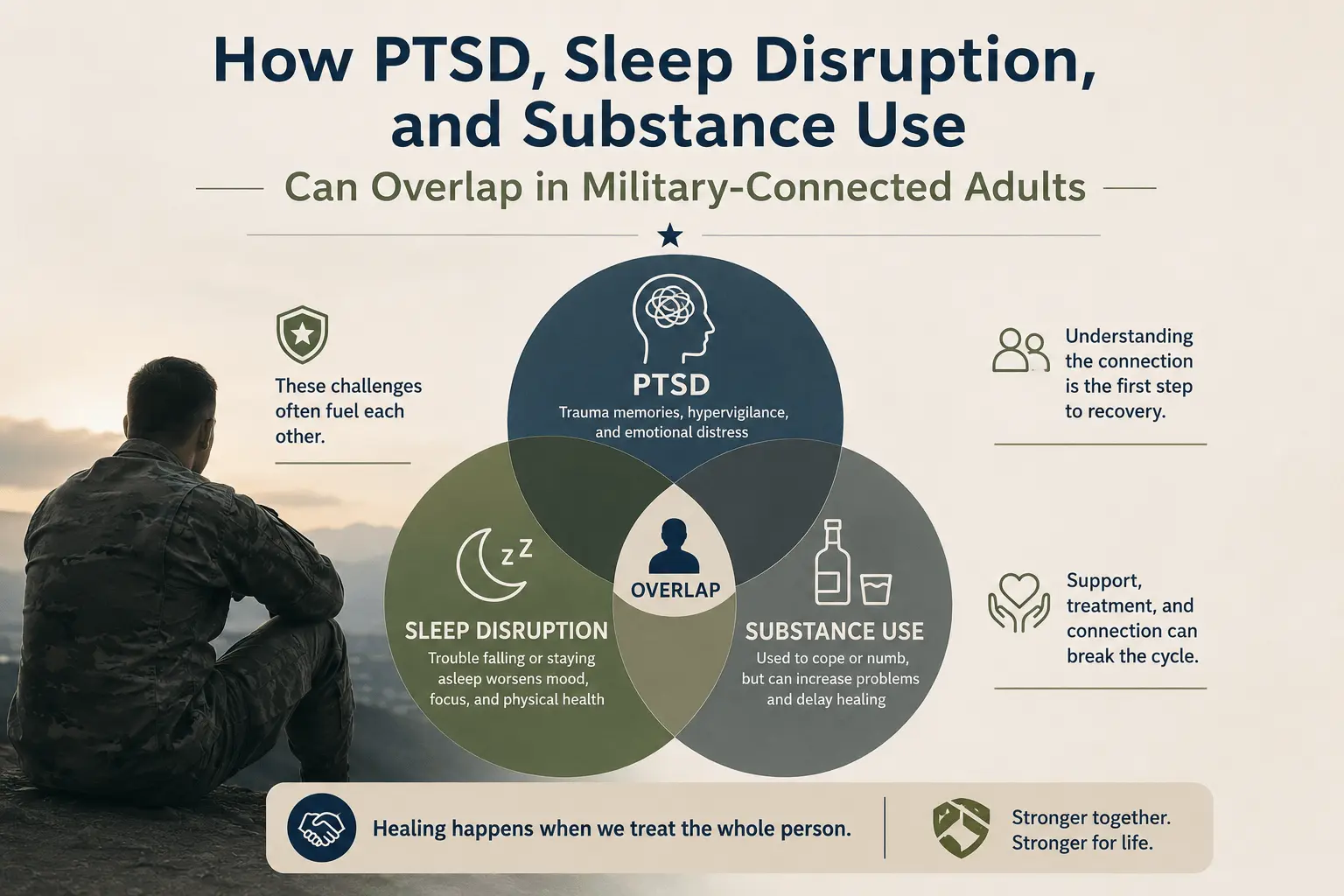
Post-traumatic stress disorder, sleep problems, and substance use can become tightly connected, but the pattern is not the same for everyone. A military-connected adult may have one of these concerns, two of them, or all three. The person may be an active-duty service member, a member of the National Guard or Reserve, a Veteran, or a family member with their own trauma history.
It is important to avoid assumptions. Military service does not automatically lead to PTSD, and having PTSD does not mean a person will develop a substance-use disorder. When the concerns do overlap, however, each can make the others harder to recognize and treat. A careful assessment can separate the pieces and identify a plan that addresses them together.
How PTSD Can Disrupt Sleep
PTSD can affect sleep in several ways. Nightmares may wake a person repeatedly. Hyperarousal can create a sense that it is unsafe to relax, even in a familiar bedroom. Ordinary sounds can trigger a startle response, while worry about having another nightmare can make bedtime itself stressful.
Insomnia and nightmares are also part of the diagnostic picture of PTSD, but they can become problems that need their own assessment. The Department of Veterans Affairs notes that chronic sleep disruption can affect concentration, memory, mood, reaction time, and physical health. Sleep apnea, pain, shift work, medications, and other medical conditions may contribute as well, so it is risky to assume that every poor night of sleep comes from trauma alone.
Why Alcohol or Drugs May Enter the Picture
Some people use alcohol, cannabis, sedating medications, or other substances to quiet intrusive thoughts, reduce tension, avoid painful emotions, or fall asleep. The short-term effect can feel useful, which makes the behavior easy to repeat.
Over time, the same strategy can create new problems. Alcohol may make a person drowsy at first, but can reduce sleep quality and contribute to waking later in the night. Intoxication and withdrawal can worsen anxiety, irritability, nightmares, and concentration. Tolerance may lead to using more for the same effect, and attempts to cut back can produce rebound sleep problems or withdrawal.
Prescription sleep or anxiety medications also deserve a careful review. Some carry risks of dependence, sedation, falls, breathing problems, or dangerous interactions with alcohol and opioids. A person should not abruptly stop a prescribed medication without medical guidance, since sudden discontinuation can be unsafe for certain drugs.
The Feedback Loop
These concerns can reinforce one another. A trauma reminder increases arousal, which interferes with sleep. Exhaustion makes emotions and cravings harder to manage. A substance is used for relief. The substance then disrupts sleep architecture, creates withdrawal symptoms, or contributes to a risky event. That event can increase stress and restart the cycle.
Avoidance can be part of the loop too. Someone may skip sleep because nightmares are frightening, avoid therapy because discussing trauma feels overwhelming, or conceal substance use because of shame or concerns about work and career consequences. The longer the pattern continues, the more difficult it can be to tell which symptom came first.
What a Thorough Assessment Should Cover
A useful evaluation looks beyond a single symptom score. It should explore:
- Trauma exposure, current PTSD symptoms, and when those symptoms began
- Sleep schedule, nightmares, insomnia, snoring, breathing pauses, and daytime fatigue
- Alcohol, drug, and medication use, including timing, amount, and withdrawal history
- Depression, anxiety, pain, head injury, and other medical or mental-health concerns
- Suicidal thoughts, recent overdoses, aggression, access to lethal means, and immediate safety
- Military status, family support, housing, work demands, confidentiality questions, and access to care
The timing of symptoms matters. If sleep problems began before the trauma, they may need a different explanation. If nightmares continue during a period without alcohol or drugs, that information is useful. If symptoms sharply increase during withdrawal, medical stabilization may need to come first.
Why Integrated Treatment Matters
People are sometimes told to resolve substance use before discussing trauma, or to finish trauma treatment before addressing alcohol or drugs. That sequence may fit some clinical situations, especially when immediate safety or medical instability is present. It should not become a blanket rule.
The VA's National Center for PTSD states that PTSD and substance-use problems can be treated at the same time. Integrated care does not mean doing every intervention at once. It means that the professionals involved share a coherent plan, consider how each condition affects the others, and adjust the pace to the person's stability, preferences, and goals.
The plan may include evidence-based psychotherapy for PTSD, treatment for substance use, medication management, sleep-focused care, peer support, and help with practical stressors. If sleep apnea, severe withdrawal, intoxication, or another medical problem is suspected, the person may need medical evaluation before or alongside behavioral-health treatment.
Military Culture and Access Questions
Military-connected adults may worry about privacy, command notification, security clearances, deployment status, or how treatment could affect a career. The answers depend on the person's status, the setting, the type of care, and current policy. Clinicians and benefit representatives should explain the applicable rules rather than offering a broad promise of complete confidentiality or no career impact.
Coverage and referral requirements also vary by plan, beneficiary category, location, and service. Independent educational resources such as TriCareRehabs.com can help people organize questions and understand treatment terminology, but eligibility, authorization, network status, and out-of-pocket costs should be confirmed directly with TRICARE or the relevant plan administrator before care is scheduled.
What Family Members Can Notice
Families cannot diagnose PTSD or a substance-use disorder, but they may notice patterns. These can include sleeping only a few hours, frequent nightmares, using alcohol every night to fall asleep, avoiding social contact, missing work, becoming unusually watchful, or taking more medication than prescribed.
A calm observation is usually more useful than an accusation: "I have noticed you are sleeping very little and drinking most nights. I am worried about you." Ask whether the person is willing to speak with a clinician and offer practical help with finding a provider, transportation, childcare, or a quiet place for an appointment.
When to Seek Urgent Help
Urgent evaluation is warranted when someone may harm themselves or another person, has a suicide plan or recent attempt, appears severely confused or detached from reality, may have overdosed, or shows dangerous withdrawal symptoms such as seizures. Call 911 for an immediate emergency.
The Veterans Crisis Line is available by dialing 988 and then pressing 1, by text at 838255, or through online chat. The 988 Suicide & Crisis Lifeline is also available to people who are not Veterans. Crisis support does not replace medical care for an overdose or severe withdrawal.
The Takeaway: Getting Help for Existing Symptoms
PTSD, disrupted sleep, and substance use can form a self-reinforcing cycle, but the cycle can be understood and treated. The first step is an assessment that considers trauma, sleep, substance use, medical conditions, safety, and the person's military context together.
Coordinated care can then address immediate risks while building longer-term recovery and healthier sleep.
References
U.S. Department of Veterans Affairs, National Center for PTSD. Sleep Problems and PTSD.
U.S. Department of Veterans Affairs, National Center for PTSD. Substance Use and PTSD.
Veterans Crisis Line. Get Help Now.
Medical Disclaimer
This article is for general educational purposes and is not a substitute for individualized medical advice, diagnosis, or treatment. Call 911 for an immediate emergency. For crisis support in the United States, call or text 988; Veterans and service members may call 988 and press 1.
Frequently Asked Questions
Can PTSD cause sleep problems in military-connected adults?
Yes. PTSD can contribute to nightmares, insomnia, hyperarousal, and difficulty relaxing at bedtime. However, sleep problems can also have other causes, including sleep apnea, pain, medications, and shift work.
Can substance use make PTSD and sleep problems worse?
Yes. Alcohol and other substances may provide short-term relief from anxiety or sleep difficulties but can contribute to poorer sleep, withdrawal symptoms, increased anxiety, and other problems over time.
Can PTSD and substance-use problems be treated at the same time?
Yes. Integrated treatment can address PTSD and substance use together when clinically appropriate. The treatment plan should consider safety, medical stability, symptoms, preferences, and individual recovery goals.
What should a PTSD and substance-use assessment include?
A thorough assessment may examine trauma symptoms, sleep patterns, substance and medication use, medical conditions, depression and anxiety, safety concerns, military status, family support, and other factors affecting treatment.
When should a military-connected adult seek urgent help?
Urgent help is important when someone may harm themselves or another person, has a suicide plan or recent attempt, may have overdosed, experiences severe confusion, or develops dangerous withdrawal symptoms such as seizures.

Comments