
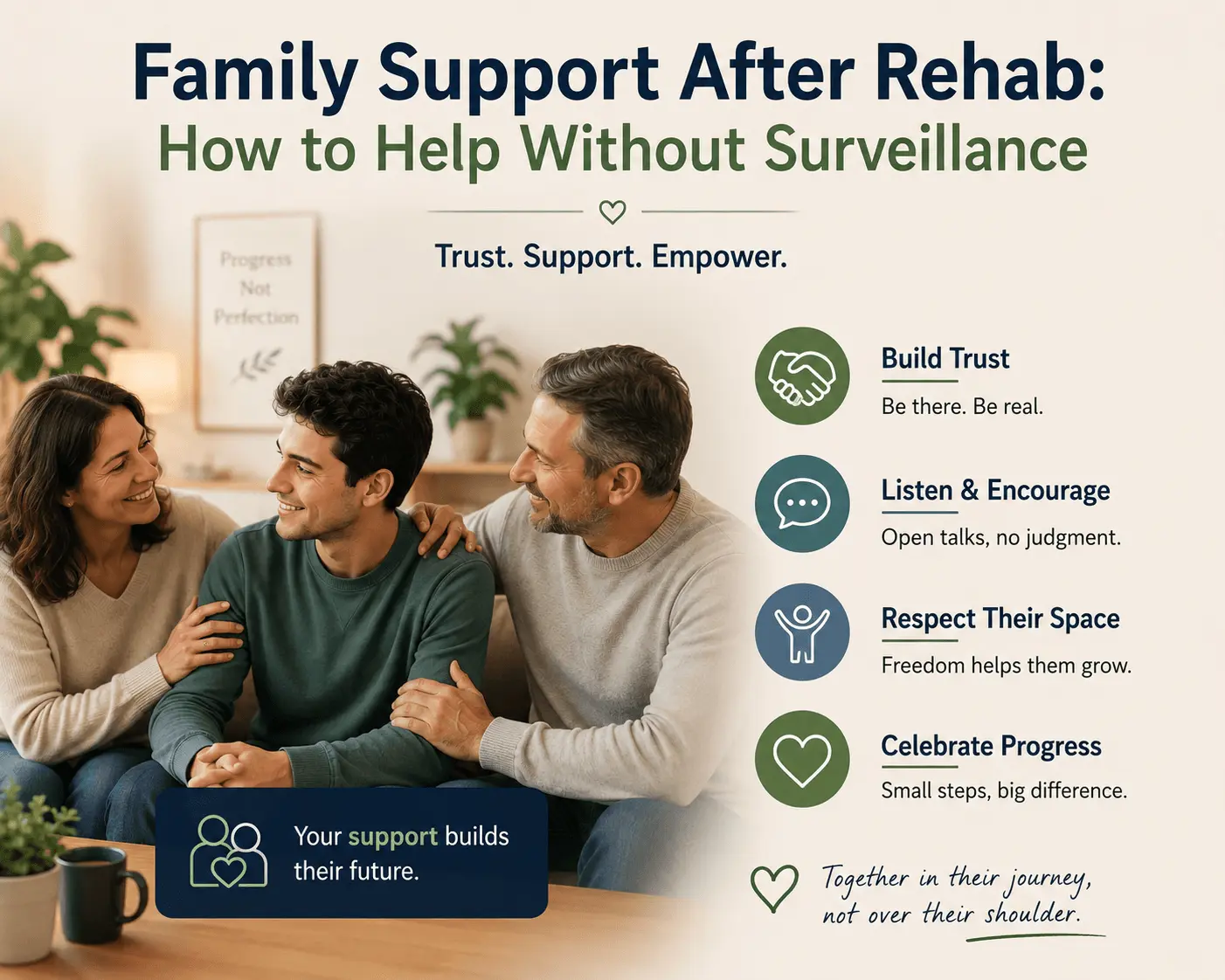
When a loved one returns home after residential behavioral-health treatment, families often feel relief and worry at the same time. There may be hope that the hardest period has passed, along with fear that a missed appointment, a quiet evening, or a change in mood means something is going wrong. That fear can pull caring people into constant monitoring.
They may check a phone, count medications, watch every bank transaction, or ask repeated questions about cravings and symptoms. The intention is protection, but the result can feel like surveillance. Recovery usually benefits more from a clear, agreed-upon support plan that respects the adult's privacy and responsibility.
Why the Transition Home Can Feel Unsteady
Residential care provides a structured environment. Daily schedules, therapy, meals, medication routines, and staff support are built into the setting. At home, those supports must be translated into ordinary life, where work, family conflict, transportation, finances, loneliness, and access to substances may all reappear.
A discharge plan may include outpatient appointments, medication management, peer support, recovery activities, sleep goals, and a crisis plan. Even a strong plan takes practice. The person returning home may be learning how much structure is helpful, which relationships feel safe, and how to respond when symptoms or urges increase.
Family members are adjusting too. They may have taken on extra responsibilities during the crisis or treatment stay. Some relationships need repair, and trust may not return on the same timeline for everyone.
Also Read the given Article: Art Therapy Ideas Mental Health
Start by Agreeing on What Support Means
A useful conversation begins with a simple question: "What kind of support would be helpful this week?" That wording gives the person in the recovery room the ability to name practical needs instead of defending against assumptions.
The discussion can lead to a short, specific plan. Helpful points to agree on include:
- How often family check-ins will happen and whether text, phone, or in-person contact is preferred
- Which appointments or transportation needs will the family help with
- What information is the person comfortable sharing about treatment and medications
- Which early warning signs does the person recognize in themselves
- Who should be contacted if symptoms increase or substance use returns
- What circumstances call for urgent or emergency help
Write the plan down in plain language and revisit it. A plan made during discharge may need adjustment after the first week at home. Revising it is not failure; it is part of learning what works.
Use Check-Ins, Not Interrogations
Ask open questions
Questions such as "How has your sleep been?" or "What feels hardest today?" invite conversation. Rapid questions about every activity can make a person feel that any honest answer will trigger an alarm. If the answer is brief, it may be better to stay available than to press for more.
Listen before trying to fix
Families sometimes move quickly to advice because they want to reduce risk. Reflecting what you heard first can be more useful: "It sounds like evenings have been lonely" or "You seem frustrated about the schedule." Listening does not mean agreeing with every decision. It communicates that the relationship is bigger than a checklist.
Comment on effort and patterns
Recovery rarely looks perfectly steady. Notice concrete efforts such as attending an appointment, using a coping skill, keeping a sleep routine, or asking for help early. At the same time, discuss patterns that affect safety or the household. One difficult day is different from several days of isolation, no sleep, missed care, or escalating substance use.
Build Structure Without Taking Over
Structure can protect recovery, but it works best when the person has a role in designing it. A shared calendar, regular meals, planned transportation, and quiet sleep hours may help. Doing every task for someone can unintentionally reduce their confidence and make family members responsible for outcomes they cannot control.
Offer choices where possible. Instead of "I am driving you to every appointment," try "Would a ride help, or do you want to arrange your own transportation?" Instead of demanding proof of attendance, ask whether a reminder or planning session would be useful.
Programs vary in how they prepare families for the transition. When reviewing aftercare information from providers such as Icarus Behavioral Health Nevada, look for concrete guidance about follow-up care, crisis contacts, medications, transportation, and the person's preferred support network. The discharge plan should identify who is responsible for each next step.
Respect Privacy While Staying Available
An adult receiving care generally decides which treatment details can be shared with family, within applicable law and safety exceptions. Families can ask the treatment team what consent is needed and encourage the person to sign a limited release if that supports the plan. A release can often be tailored to specific people and types of information.
Privacy is not the same as secrecy. A person can keep therapy details private while still sharing practical information such as appointment dates, a crisis contact, or what kind of help they want during a difficult evening. Families can also state what they need in order to feel safe in their own home.
Know the Difference Between a Setback and an Emergency
Irritability, fatigue, anxiety, or a desire for more space can occur during an adjustment period. They deserve attention, but they do not automatically mean an emergency. The agreed plan should identify the person's usual early warning signs and what action to take first, such as calling a therapist, prescriber, sponsor, peer, or outpatient program.
Seek immediate help when there is an imminent risk of harm, a suicide attempt or plan, severe confusion, loss of contact with reality, a suspected overdose, dangerous withdrawal symptoms, violence, or a medical emergency. Do not leave a person alone when doing so would create immediate danger. Call 911 for an emergency. In the United States, call or text 988 for crisis support.
Set Boundaries That Protect the Whole Household
Support does not require accepting threats, violence, substance use in the home, unsafe driving, theft, or repeated financial harm. Boundaries should describe what the family member will do, not attempt to control another adult. For example: "I will not lend the car if you appear impaired" is clearer than "You are never allowed to struggle again."
State boundaries calmly, connect them to safety, and follow through consistently. If children or vulnerable adults are in the home, their safety must remain a priority. The treatment team or a family therapist can help turn broad concerns into realistic household agreements.
Family Members Need Support Too
A loved one's treatment does not erase the family's stress. Caregivers may be tired, angry, grieving, or unsure whom to trust. Peer-led family groups, individual therapy, family education, and time for ordinary routines can help. The National Alliance on Mental Illness emphasizes that family education can strengthen communication, problem-solving, crisis preparation, and caregiver coping.
Taking care of yourself is not abandoning the person in recovery. It helps you respond from a steadier place and reduces the pressure to monitor every sign of discomfort.
If Symptoms Increase or Substance Use Returns
Respond to the current level of risk rather than turning the event into a verdict on the entire recovery process. If there is no immediate danger, return to the plan: contact the appropriate clinician, describe what changed, and ask whether the person needs an urgent evaluation or a different level of care.
Avoid arguing while someone is intoxicated or highly agitated. Focus on immediate safety and medical needs. Once the crisis has passed, the treatment plan can be reviewed to understand what support was missing, which warning signs appeared, and what should change next time.
The Takeaway: Clear Planning Leads to Effective Support
The goal of family support is not to eliminate every risk through observation. It is to create a relationship in which concerns can be raised early, practical help is available, privacy is respected, and safety steps are clear.
A written plan, calm communication, consistent boundaries, and support for caregivers can make the move home more manageable for everyone.
References
National Alliance on Mental Illness. Supporting Recovery.
National Alliance on Mental Illness. Family-to-Family Education Program.
Substance Abuse and Mental Health Services Administration. Find Support in a Crisis.
Medical Disclaimer
This article is for general educational purposes and is not a substitute for individualized medical advice, diagnosis, or treatment. Call 911 for an immediate emergency. In the United States, call or text 988 for crisis support.
Frequently Asked Questions
How can I support a loved one after rehab?
Agree on practical support, regular check-ins, transportation, appointments, and clear boundaries while allowing your loved one to remain involved in recovery decisions.
Should I monitor my loved one's recovery?
Constant monitoring is usually not necessary. Instead, agree on specific warning signs, check-ins, and safety steps that respect the person's privacy and independence.
How do I respect privacy during recovery?
Ask what treatment information your loved one is comfortable sharing. Focus on practical details, such as appointments or crisis contacts, rather than demanding access to private therapy conversations.
What are signs of relapse after rehab?
Possible warning signs include increased substance use, missed treatment appointments, isolation, major sleep changes, worsening symptoms, or returning to behaviors associated with previous substance use.
When is a recovery setback an emergency?
Immediate help may be needed for an overdose, suicide attempt or plan, severe confusion, violence, loss of contact with reality, dangerous withdrawal symptoms, or an immediate risk of harm.




Comments