
Every year on October 10, people worldwide focus on mental health awareness. World Mental Health Day is a chance to talk about mental health. It helps us learn about global issues and support those facing emotional challenges. This day reminds us that mental health is as vital as physical health.
Mental health is a public health priority. Millions face challenges daily. Many suffer in silence due to stigma or lack of resources. World Mental Health Day seeks to change this. It raises awareness and encourages open conversations.
The goals of this day are simple but impactful. It aims to educate people about mental health. It also wants to reduce shame around mental health issues. The goal is to improve access to resources. We also want to unite communities to support everyone’s mental health.
History and Origin of World Mental Health Day
When and Why It Started
World Mental Health Day began in 1992. The World Federation for Mental Health started it. This global organization works in over 150 countries. Mental health advocacy groups began the day to highlight the global neglect and shortage of resources for mental health issues.
Few people discussed depression, anxiety, or mental health issues back then. The mental health stigma was even stronger than it is today. People with mental health challenges often felt alone and ashamed. The World Federation for Mental Health wanted to change this.
Role of the World Federation for Mental Health
The World Federation for Mental Health (WFMH) leads the global mental health movement on October 10 each year. This organization runs mental health campaigns. It shares educational materials and partners with global mental health groups. Together, they raise awareness.
Each year, WFMH brings together governments, healthcare workers, schools, businesses, and community mental health programs. They all work to improve emotional well-being for everyone. Their work has helped millions of people understand that mental health matters.
How the Mission Evolved Over the Years
World Mental Health Day began with a focus on basic mental health education. Over the years, the mission has grown. It now includes mental health prevention, advocating for rights, and enhancing workplace mental health. It also supports teens and students. Finally, it ensures everyone can access mental health resources.
The day has become a powerful tool for mental health advocacy worldwide. What began as a small awareness campaign is now a global movement. It reaches hundreds of millions of people each year.
Importance of World Mental Health Day
Why Mental Health Conversations Matter
Talking openly about mental health saves lives. When we discuss mental health issues worldwide, we help people feel less alone. We let them know it's okay to ask for help. We show them that mental health issues are real medical conditions. They are not personal weaknesses.
Mental health conversations also help people recognize warning signs in themselves and others. Talking about emotional wellbeing makes it easier to seek help when needed. It's crucial to support young people's mental health. Many don't know how to share their feelings.
Common Stigmas and Misconceptions
Mental health stigma stops people from getting the help they need. Some common wrong beliefs include:
- Thinking mental health problems mean someone is weak or lazy
- Believing people should "get over" depression or anxiety
- Assuming mental health issues are rare when they're actually very common
- Thinking therapy is only for people with severe problems
- Believing mental health problems are permanent and can't improve
World Mental Health Day aims to challenge false beliefs. It shares real mental health statistics and stories from those facing these challenges. The goal is to help everyone see that mental health issues can affect anyone. Recovery is possible with the right support.
How Awareness Improves Prevention and Early Support
Raising awareness about mental health has real benefits. Knowing about mental health prevention and early warning signs helps people get help sooner. Early treatment leads to better outcomes and faster recovery.
Mental health awareness also helps communities create better mental health support resources. Schools develop programs for mental health for students. Workplaces improve their workplace mental health policies. Governments invest more money in public mental health services. All this happens because people speak up and demand better mental health care.
Annual Themes for World Mental Health Day
 How Themes Are Chosen
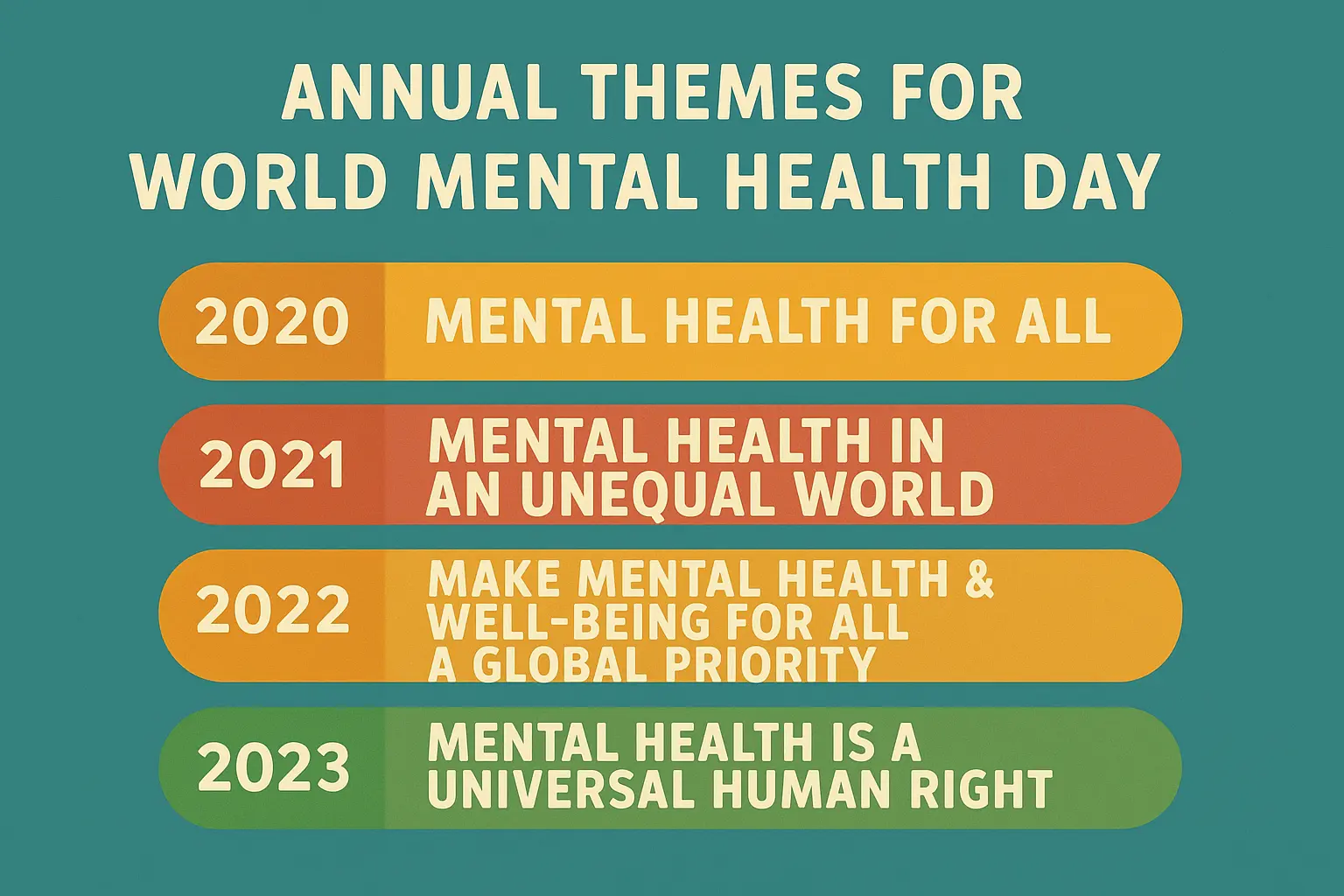
Each year, World Mental Health Day focuses on a specific theme. Mental health organizations choose these themes based on global challenges and needs. The themes help mental health campaigns stay focused and effective.
Themes are chosen by reviewing mental health statistics and listening to advocacy groups. We look at which issues need focus and what will resonate with people worldwide.
Examples of Themes From Recent Years
Recent themes have included:
- "Mental Health in an Unequal World" focusing on mental health inequality
- "Make Mental Health and Wellbeing for All a Global Priority"
- "Mental Health at Work" highlighting workplace mental health
- "Young People and Mental Health" focusing on mental health for teens
Each theme shapes mental health events, wellness activities, and community initiatives all year long.
Why Themes Help Guide Global Initiatives
Having a specific theme helps everyone work together. Schools planning mental health day activities can align their programs with the theme. Businesses focusing on workplace mental health can create relevant mental wellness activities. Mental health organizations can develop targeted mental health education materials.
Themes help the media shape their stories. They also allow mental health campaigns to connect with more people. This ensures consistent messages about the importance of mental health.
Understanding Global Mental Health Challenges
Rising Rates of Anxiety, Depression and Stress
Mental health issues worldwide are increasing at alarming rates. Over 280 million people around the world have depression, according to mental health stats. Anxiety disorders affect over 300 million people. These numbers have experienced substantial growth in recent years, particularly among young people.
Stress levels are higher than ever before. People face pressure from work, school, finances, relationships, and health concerns. The COVID-19 pandemic made mental health challenges even worse for many people. Recognizing these trends shows why mental health awareness is crucial today.
Mental Health Inequality in Low-Income Communities
Global mental health resources are not distributed fairly. People in low-income communities often struggle the most with mental health issues. Yet, they have the least access to help. This creates serious mental health inequality.
In many developing countries, there is usually only one mental health professional for every 100,000 people. In wealthy countries, there is often one mental health professional for every 1,000 people. This gap leaves millions without the mental health care they need.
Access Barriers
Many obstacles prevent people from getting mental health support resources:
Treatment Barriers
Finding good mental health care is difficult in many places. Long waiting lists, a shortage of qualified professionals, and few mental health facilities create barriers. Some areas have no mental health services at all.
Medication Barriers
Mental health medications can be expensive, especially without insurance. In some countries, essential mental health medications are simply not available. This leaves people without important treatment options.
Awareness Barriers
Many people fail to see their mental health issues. They often don't know where to seek help. Lack of mental health education means people suffer longer before seeking support. Mental health stigma also stops people from asking for help even when they know they need it.
Signs of Poor Mental Health to Recognize
 Emotional Symptoms
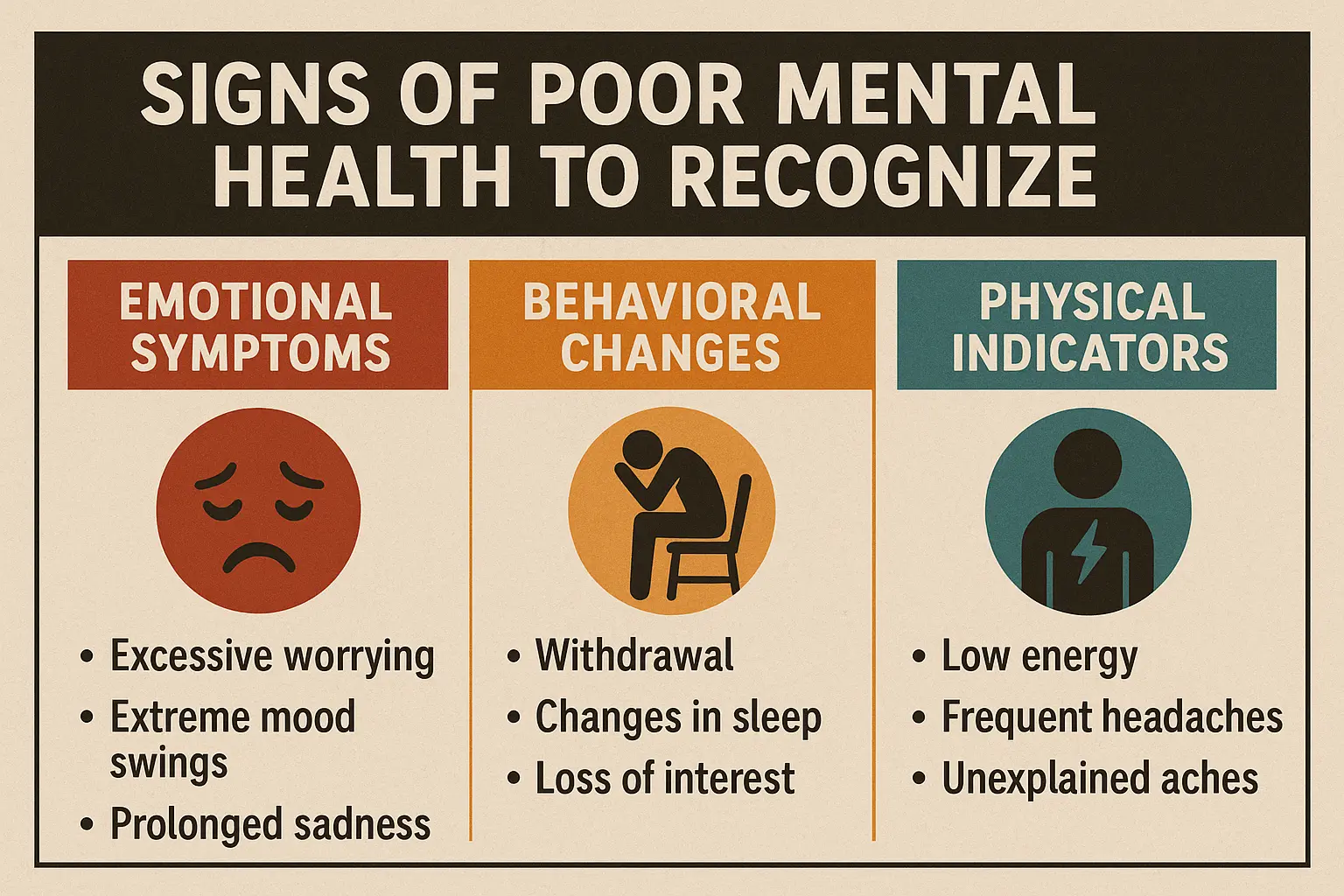
Recognizing when someone struggles with their emotional wellbeing is important. Common emotional signs include:
- Feeling sad, empty, or hopeless most of the time
- Losing interest in activities that used to be enjoyable
- Feeling anxious, worried, or on edge constantly
- Having mood swings or feeling emotionally numb
- Feeling overwhelmed by normal daily tasks
- Experiencing intense anger or irritability
Feeling this way sometimes is normal. But if it lasts for weeks and disrupts daily life, it might signal a mental health issue that needs help.
Behavioral Changes
Changes in behavior can signal mental health problems:
- Withdrawing from friends and family
- Avoiding social activities or responsibilities
- Changes in sleep patterns (sleeping too much or too little)
- Significant changes in eating habits
- Decreased performance at work or school
- Increased use of alcohol or drugs
- Engaging in risky or self-destructive behaviors
Supporting mental health means noticing changes in ourselves and those we care about.
Physical Indicators
Mental health challenges often show up in physical ways:
- Unexplained aches and pains
- Constant fatigue or low energy
- Frequent headaches or stomach problems
- Changes in weight without trying
- Difficulty concentrating or making decisions
- Moving or speaking more slowly than usual
Mental health and physical health are linked. This means many mental health issues show physical symptoms. Doctors often can't explain these symptoms with tests alone.
When Someone May Need Professional Help
Seek professional help if mental health issues disrupt your daily life. If symptoms last weeks or months, cause major distress, harm relationships or work, or involve thoughts of self-harm, don’t hesitate to reach out.
Mental health resources, such as therapy and counseling, offer effective tools and strategies for support. There's no shame in seeking professional support. It's actually a sign of strength and self-awareness.
Ways to Participate in World Mental Health Day
Awareness Campaigns
Getting involved in mental health campaigns makes a real difference. You can take part through:
Schools and Educational Settings
Schools can hold mental health day activities such as:
- Assemblies on mental health awareness
- Classroom talks about emotional wellbeing
- Poster contests focused on mental health themes
- Peer support programs
These activities promote understanding and support among students.
These activities boost students' mental health and lower stigma around it among young people.
Workplaces
Companies can boost workplace mental health by:
- Hosting lunch and learn sessions.
- Bringing in mental health speakers.
- Distributing education materials.
- Starting conversations about support resources for employees.
Community Groups
Community mental health initiatives bring neighbors together. Local organizations can host mental health events. They can organize support group meetings, set up info booths at community centers, and plan wellness activities for everyone.
Fundraisers and Charity Events
Raising money for mental health organizations helps expand mental health support resources. Popular fundraising ideas include:
- Charity walks or runs for mental health
- Bake sales or craft fairs
- Online donation campaigns
- Benefit concerts or talent shows
- Sponsored challenges like fitness events
Money raised helps mental health groups. It supports services, funds research, trains professionals, and pushes for better mental health policies.
Sharing Educational Resources
A simple way to get involved is by sharing mental health education online and in your community. You can share articles on mental health's importance. Post statistics to show how common these challenges are. Distribute info about support resources. Also, share personal stories (with permission) to help reduce stigma.
Online Participation Through Social Media
Social media is powerful for raising awareness about mental health. Use hashtags like #WorldMentalHealthDay. Share facts about global mental health issues. Post helpful mental health tips. Join online mental health campaigns. Show support for those facing mental health challenges.
Small actions, like sharing a post or leaving a supportive comment, can make a big difference. They help someone feel less alone and encourage them to reach out for help.
Mental Health Support Strategies That Actually Help
Techniques for Stress Reduction and Emotional Balance
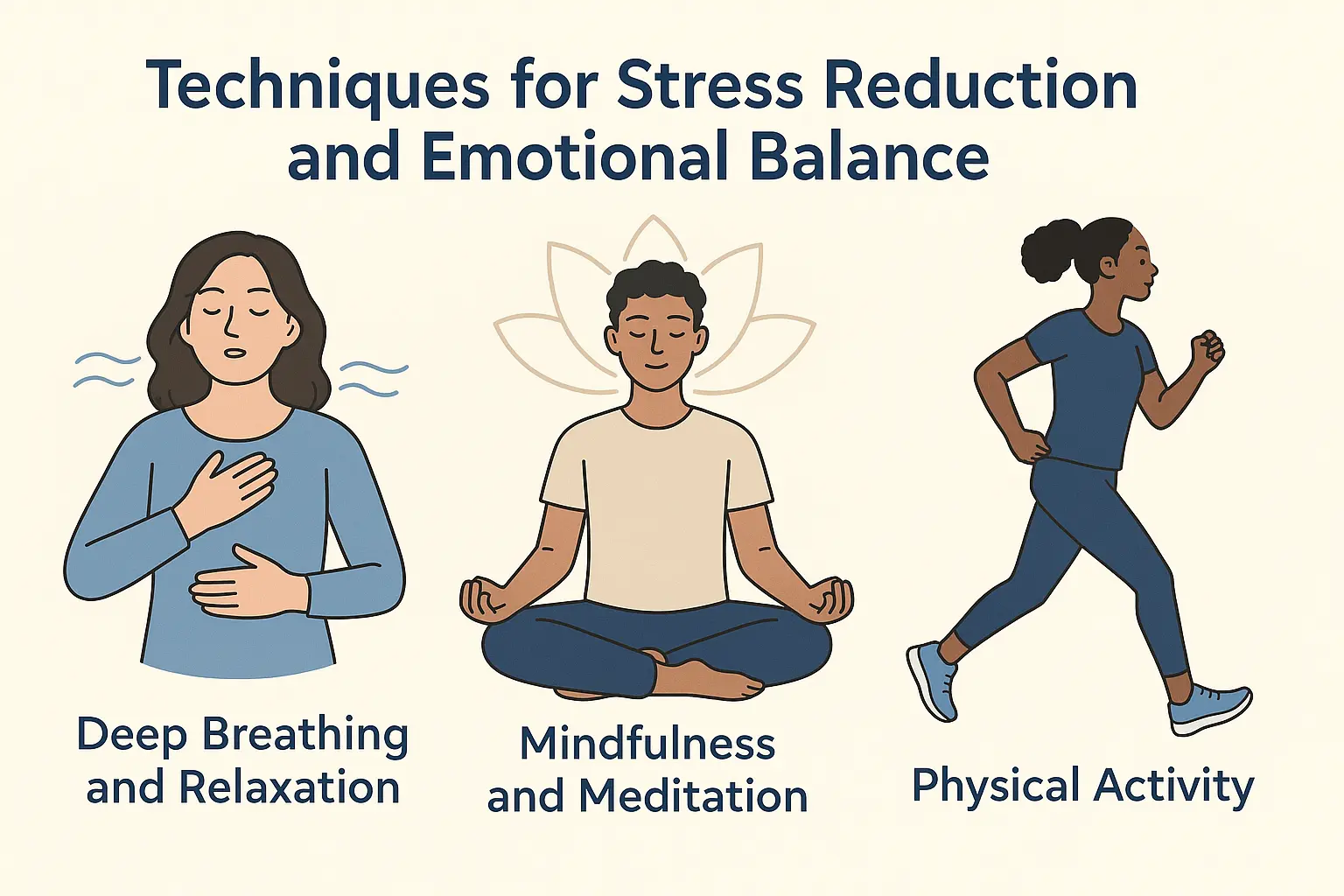 Learning how to promote mental health in your own life is essential. Evidence-based strategies include:
Deep Breathing and Relaxation
Simple breathing exercises calm your nervous system. Try breathing in for four counts, holding for four counts, and breathing out for six counts. This activates your body's relaxation response.
Mindfulness and Meditation
Focusing on the present moment helps lower anxiety and boosts emotional well-being. Even five minutes of quiet sitting and focusing on your breath helps.
Physical Activity
Exercise is one of the best mental health tips. Moving your body releases feel-good chemicals in your brain, reduces stress hormones, and improves mood. You don't need intense workouts; even walking helps.
Self-Care Strategies Backed by Research
Mental health self care means taking deliberate actions to protect your emotional wellbeing:
- Getting enough quality sleep (7-9 hours for most adults)
- Eating nutritious meals regularly
- Limiting alcohol and avoiding drugs
- Spending time doing activities you enjoy
- Setting healthy boundaries in relationships
- Taking breaks when feeling overwhelmed
These might seem simple, but they're powerful tools for supporting mental health daily.
Importance of Social Support Networks
Humans need connection. Strong relationships protect mental health. Spend time with friends and family. Join clubs or groups that share your interests. Volunteer in your community. Don’t isolate yourself when you’re having a hard time.
Talking to someone you trust about your feelings reduces stress and helps you feel supported. Building community mental health initiatives strengthens everyone's emotional wellbeing.
When to Seek Therapy or Counseling
Therapy provides professional mental health support resources when self-help strategies aren't enough. If you feel overwhelmed for weeks, seek help. If your daily life is hard, your relationships are tough, or you’re thinking about self-harm, it’s important to reach out for help.
Different types of therapy help with different mental health challenges.
A qualified therapist can help you:
- Learn coping skills
- Understand your thoughts and feelings
- Work through trauma
- Build healthier patterns
Role of Institutions in Promoting Mental Health
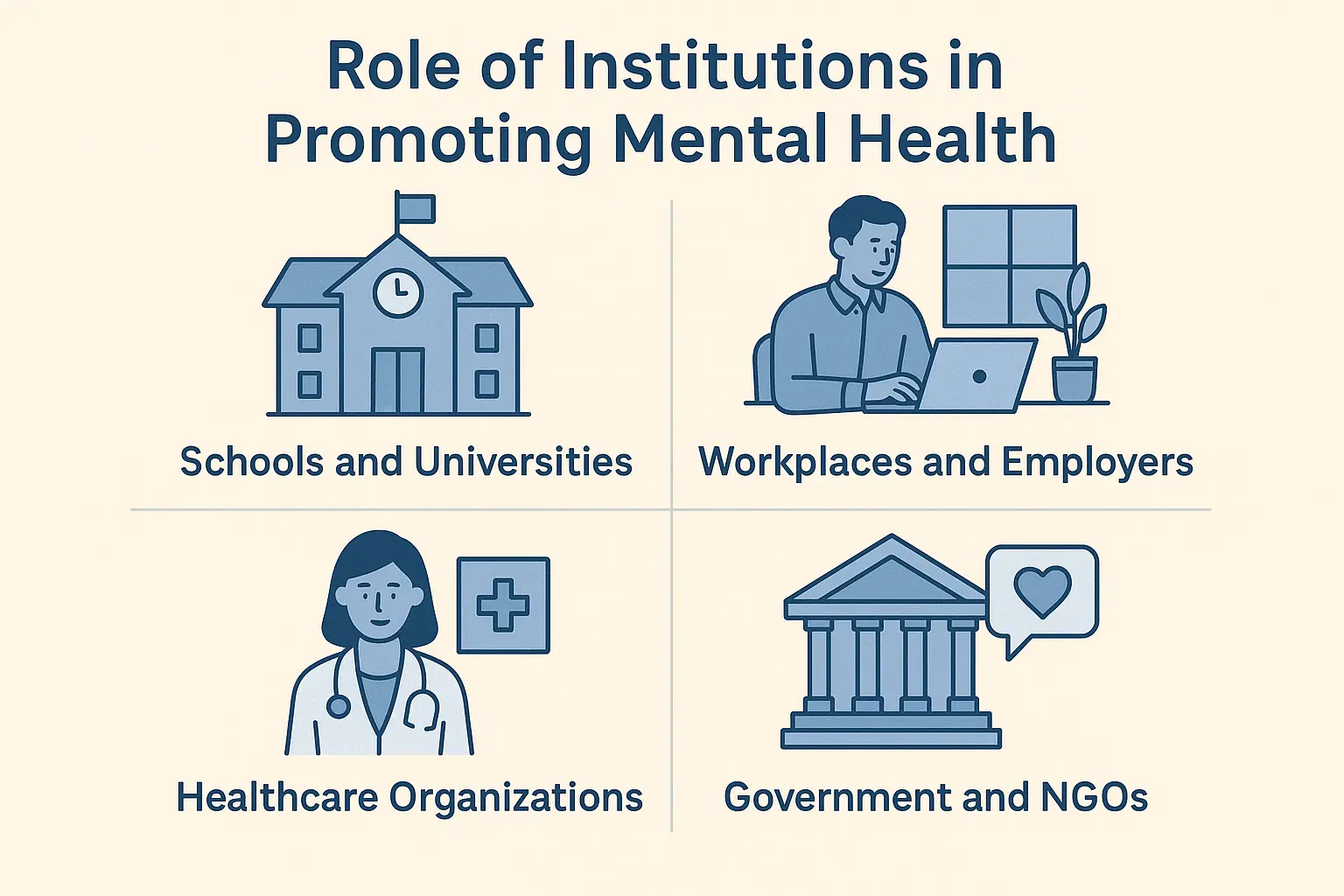 Schools and Universities
Educational institutions play a huge role in mental health for students.
Schools can boost mental health awareness by:
- Training teachers to spot warning signs.
- Providing access to counselors and mental health experts.
- Including mental health education in classes.
- Creating safe spaces for students to share.
- Offering wellness activities and stress management programs.
Early mental health education helps young people build emotional skills for life. Schools that prioritize teen mental health see improved grades and fewer behavior problems.
Workplaces and Employers
Workplace mental health affects productivity, job satisfaction, and employee retention.
Forward-thinking employers boost mental health by:
- Offering employee help programs.
- Providing mental health days.
- Training managers on mental health awareness.
- Reducing stress and unrealistic expectations.
- Creating cultures that encourage open talks about mental health.
Investing in workplace mental health brings many benefits.
Companies can expect:
- Fewer sick days
- Increased productivity
- Improved employee morale
- Lower healthcare costs
Healthcare Organizations
Healthcare systems must integrate mental health into primary care. We need to train all doctors on mental health issues worldwide. This includes screening patients for mental health challenges. We also connect patients to mental health support resources. Finally, we treat mental health with equal importance as physical health.
When healthcare groups focus on mental health prevention and early intervention, people receive help sooner. This leads to better outcomes.
Government and NGOs
Governments and non-governmental organizations drive policy changes that improve public mental health. They can boost funding for mental health services. They can also pass laws to protect mental health rights. Supporting mental health research is key. Public campaigns can help reduce stigma. Lastly, it's important to ensure that resources reach underserved communities.
Mental health advocacy by these organizations creates systemic changes that benefit entire populations.
How Media and Brands Influence Awareness
Responsible Messaging
Media coverage of mental health issues worldwide has increased dramatically. This can be positive when done responsibly.
Good mental health reporting should:
- Use accurate statistics
- Avoid sensationalism
- Include expert opinions
- Provide support resources
- Share recovery stories with challenges
This approach promotes a balanced view.
Irresponsible coverage can increase mental health stigma or even trigger vulnerable people. That's why responsible messaging matters.
Mental Health Marketing Ethics
As mental health awareness grows, more brands want to participate. This is good when done ethically. Companies should not exploit mental health for profit. They must be genuine in their mental health campaigns. Donating to mental health organizations is important. They should also offer real value through mental health education. Finally, listening to mental health advocacy groups is key.
How Brands Participate Without Exploiting the Topic
Ethical brand involvement in mental health events focuses on real impact, not image. This means:
- Partnering with trusted mental health organizations.
- Educating employees about mental health awareness.
- Creating supportive policies for employee wellbeing.
- Sharing mental health resources through their platform.
When brands truly support mental health, everyone wins. It’s better than just pretending to care.
How World Mental Health Day Impacts Long-Term Change
Policy Improvements
World Mental Health Day has influenced important policy changes worldwide. Governments have boosted mental health budgets. They passed laws to ensure insurance covers mental health treatment equally. National mental health strategies were developed. Also, investments in community mental health initiatives grew.
These policy changes help more people get the mental health support they need.
Increased Access to Mental Health Services
Awareness efforts have expanded services in many ways:
- More mental health professionals entering the field
- Telehealth options making therapy accessible remotely
- Crisis hotlines and text services for immediate help
- School-based mental health programs
- Workplace mental health support
- Community mental health centers in underserved areas
While gaps remain, especially regarding mental health inequality, progress continues as awareness grows.
Growing Acceptance and Destigmatization
Perhaps the biggest impact is cultural change. More people now openly discuss their mental health challenges. Celebrities share their stories. Employers acknowledge workplace mental health. Schools teach mental health education.
More people now seek help sooner. They support each other better. Mental health challenges are seen as common, not shameful secrets.
The mental health stigma that once kept many silent is slowly fading. Days like World Mental Health Day and the people involved are making a difference.
Conclusion
World Mental Health Day reminds us that emotional well-being is as important as physical health. This day brings real change for millions worldwide. It does this through mental health awareness campaigns, education initiatives, and open conversations.
The importance of mental health cannot be overstated. Mental health issues worldwide affect individuals, families, and entire communities. Join World Mental Health Day by attending events, sharing resources, or discussing challenges. Your participation helps reduce stigma and improve lives.
But mental health advocacy shouldn't stop on October 10. Supporting mental health is a year-round responsibility. Keep learning and talking with others. Check in on those you care about. Advocate for better public mental health services. Also, remember to practice self-care for your mental health.
Let’s join forces on mental health campaigns and community projects. Together, we can create a world where everyone receives the support they need and deserve. Where asking for help is seen as strength. Where emotional wellbeing is valued. Where no one suffers alone.
Every action toward raising awareness about mental health matters. Every bit of your participation matters. It helps drive the global movement for better mental health for everyone.
Comments