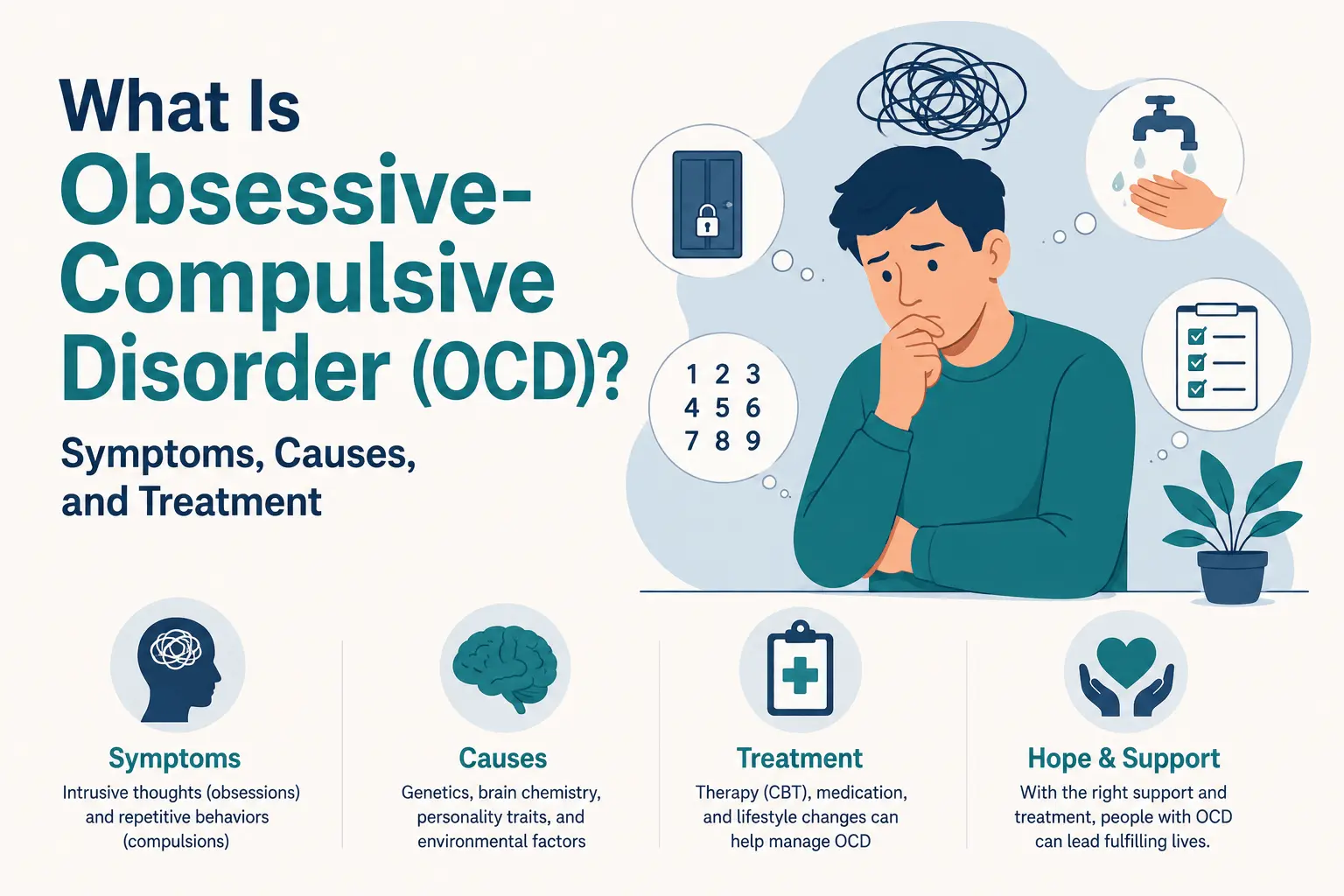
Obsessive-compulsive disorder (OCD) is a mental health condition involving unwanted thoughts and repetitive behaviors. These symptoms can cause significant distress and interfere with daily life. OCD is not simply about cleanliness, organization, or perfectionism. Understanding its symptoms and available treatments can help people recognize when professional support may be needed.
What Is Obsessive-Compulsive Disorder (OCD)?
OCD involves obsessions, compulsions, or both. Obsessions are unwanted thoughts, images, or urges that repeatedly enter the mind. Compulsions are repetitive behaviors or mental acts performed to reduce distress or prevent feared outcomes.
For example, someone may repeatedly check a locked door because they fear someone could enter their home. Even when they know the door is locked, the doubt may return.
What Are the Common Symptoms of OCD?
OCD symptoms differ between individuals, but they often involve recurring fears and repetitive actions. Common symptoms include:
-
Fear of germs, dirt, or contamination.
-
Repeatedly checking locks, appliances, or other things.
-
Unwanted thoughts about harming someone.
-
Feeling that objects must be arranged in a particular way.
-
Repeating words, counting, or silently reviewing events.
-
Frequently seeking reassurance from other people.
-
Avoiding situations that trigger distressing thoughts.
Some compulsions are mental and may not be visible to others. A person might silently repeat phrases, review memories, or try to cancel unwanted thoughts.
OCD can consume significant time and affect relationships, work, education, sleep, and everyday responsibilities. Not everyone who experiences unwanted thoughts or checks something repeatedly has OCD.
What Are the Common Types or Themes of OCD?
OCD can involve different fears and repetitive behaviors. These themes are not separate diagnoses, and individuals may experience several at once.
Contamination fears: A person may fear germs, dirt, or illness and repeatedly wash their hands or clean surfaces.
Checking: Someone may repeatedly check doors, appliances, or messages because they doubt whether something was done correctly.
Harm related thoughts: A person may experience unwanted thoughts about accidentally or deliberately hurting someone. Having these thoughts does not mean they intend to act on them.
Symmetry and order: Someone may feel intense discomfort when objects seem uneven or arrangements feel incomplete.
Relationship related obsessions: A person may repeatedly question their feelings, their partner’s feelings, or whether their relationship is right.
Some people experience mainly mental compulsions, such as repeating phrases or reviewing situations internally. These symptoms can be difficult to recognize because they do not always involve visible rituals.
Is OCD the Same as Being Neat or a Perfectionist?
No. Enjoying cleanliness, organization, or routine does not automatically mean someone has OCD. These preferences usually do not cause severe distress or significantly disrupt daily activities.
OCD involves intrusive thoughts and repetitive behaviors that can feel difficult to control. People may recognize that their rituals are excessive but still struggle to resist them.
OCD also differs from obsessive compulsive personality disorder (OCPD). OCPD involves a persistent pattern of perfectionism, control, and order that affects how someone approaches daily life.
What Causes OCD?
There is no single confirmed cause of OCD. Research suggests that several factors may contribute to its development.
Genetics: Having a family history of OCD may increase the likelihood of developing the condition.
Brain biology: Differences in brain function and related processes may contribute to OCD symptoms.
Environmental experiences: Difficult experiences may influence symptoms in some people, although they do not explain every case.
Stress: Stress does not necessarily cause OCD, but it can make existing symptoms more difficult to manage.
OCD can begin during childhood, adolescence, or adulthood. Its symptoms may change over time and become more noticeable during stressful periods.
How Is OCD Diagnosed?
A qualified mental health professional can assess whether someone’s symptoms meet the criteria for OCD. The assessment usually includes questions about recurring thoughts, compulsive behaviors, distress, and their effects on daily life.
A professional may also consider other conditions that could explain similar symptoms. There is no single symptom that confirms OCD, so self diagnosis is not reliable.
Consider seeking an assessment if these thoughts or behaviors consume substantial time, cause ongoing distress, or interfere with everyday responsibilities.
How Is OCD Treated?
OCD can be managed with evidence based treatments. The most suitable approach depends on symptom severity, personal circumstances, and professional assessment.
Exposure and Response Prevention (ERP)
Exposure and response prevention is a form of cognitive behavioral therapy commonly used to treat OCD. It helps people gradually face feared situations without performing their usual compulsions.
For example, someone who repeatedly checks a lock may practice leaving after checking it once, following a therapist’s treatment plan. Over time, this approach can help reduce the urge to perform repeated checks.
ERP can feel uncomfortable initially, so working with a trained professional can provide guidance and support.
Medication for OCD
Doctors may prescribe medications, including selective serotonin reuptake inhibitors (SSRIs), to help reduce OCD symptoms. Some people benefit from medication alone, while others benefit from combining medication with therapy.
Medication choice, dosage, possible side effects, and treatment duration should be discussed with a qualified healthcare professional. Do not start, change, or stop prescribed medication without medical advice.
When Should You Seek Help for OCD?
Consider professional support when repetitive thoughts or behaviors cause distress, take up substantial time, or interfere with work, school, relationships, or daily activities.
You do not need to wait until symptoms become severe before seeking help. A qualified mental health professional can assess your concerns and discuss suitable treatment options.
Final Thoughts
OCD involves more than ordinary worries, cleanliness, or repeated checking. Its symptoms can affect daily life, but effective treatments are available. If recurring thoughts or compulsions cause distress, consult a qualified mental health professional for assessment and support.
References
-
National Institute of Mental Health. Obsessive Compulsive Disorder
-
MedlinePlus. Obsessive Compulsive Disorder
-
International OCD Foundation. About OCD